2026 Top Heavy Equipment Trends Innovations and Predictions?
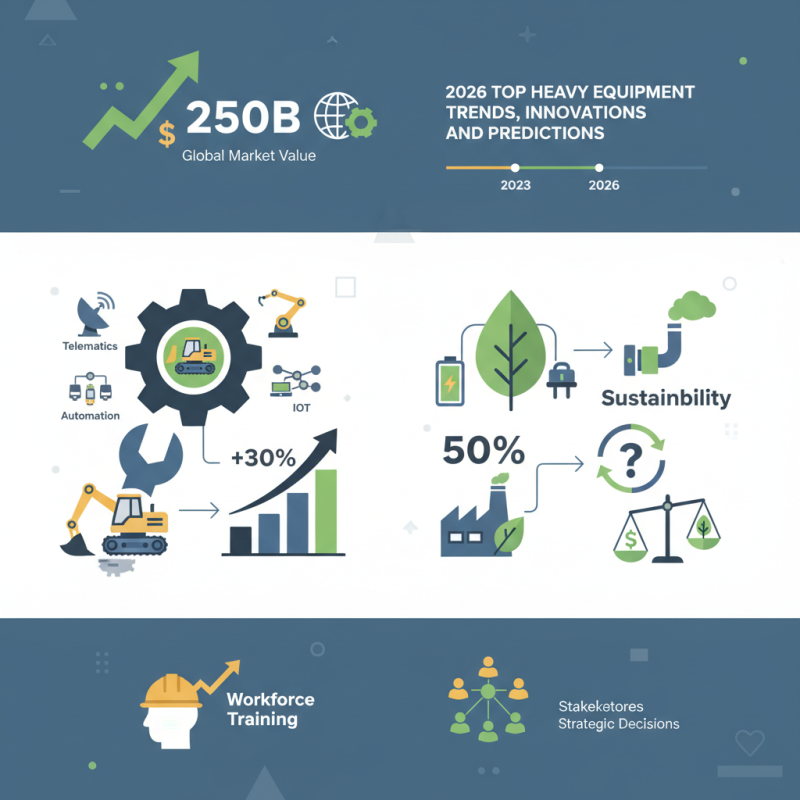
The heavy equipment industry is poised for significant change by 2026. According to recent market analysis, the global heavy equipment market is expected to reach $250 billion by 2026, driven largely by advancements in technology and sustainability. Companies are increasingly adopting new innovations to improve efficiency, reduce costs, and minimize environmental impact.
Emerging technologies like telematics and automation are reshaping the landscape. Many firms report that integrating IoT solutions into their heavy equipment can enhance productivity by up to 30%. However, this transition poses challenges that require careful consideration. Adapting to these innovations is not always straightforward. Some companies struggle to train their workforce adequately, leading to missed opportunities.
Moreover, the push for greener practices is evident. By 2026, nearly 50% of heavy equipment production will focus on eco-friendly technologies. Yet, the journey to sustainability is complex, prompting reflection on how quickly the industry can shift. Stakeholders must weigh the benefits against the costs, making strategic decisions that impact their future.
Emerging Technologies in Heavy Equipment for 2026: An Overview
Emerging technologies are reshaping the heavy equipment industry for 2026.
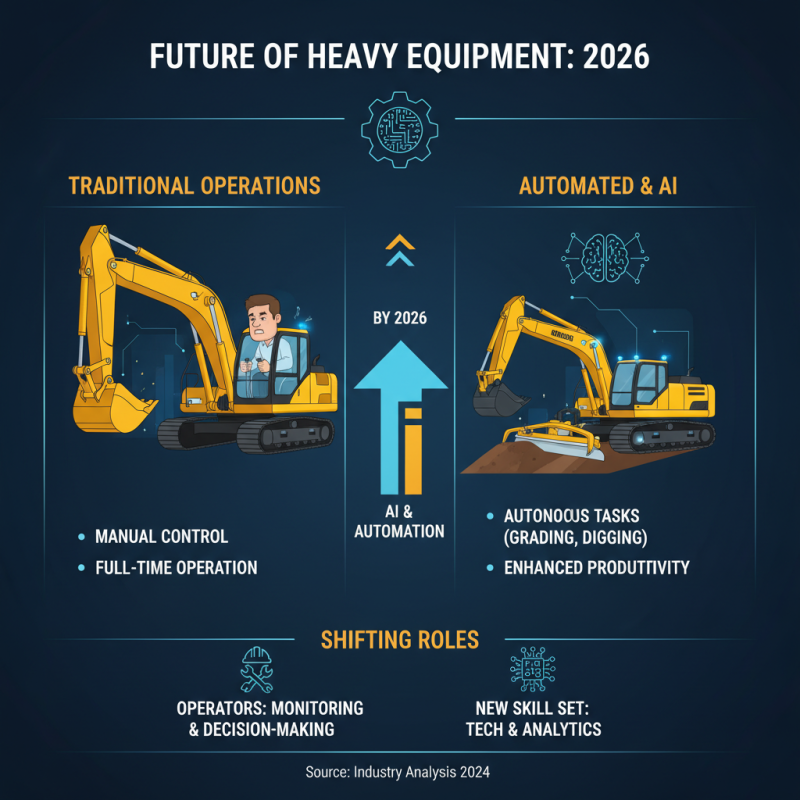
Automation remains a key focus. Heavy machinery, now equipped with advanced sensors, can operate with minimal human intervention. This boosts efficiency but raises questions about workforce displacement. Can the industry adapt to this shift?
Electric and hybrid solutions are gaining traction. They promise reductions in emissions and fuel costs. Construction sites may become greener in the coming years. However, the initial investment is often high. Will companies embrace this change? The answer lies in balancing cost and sustainability.
Telematics offers another intriguing development. Real-time data monitoring allows for proactive maintenance. This can minimize downtime and extend equipment life. Yet, data security poses risks. Will companies protect sensitive information effectively? The future holds promise, but challenges remain.
Sustainability Trends in Heavy Equipment: Reducing Carbon Footprint by 2026
The heavy equipment industry is experiencing a significant shift towards sustainability. By 2026, many companies aim to reduce their carbon footprint by adopting cleaner technologies. Advances such as electric machinery and alternative fuels are gaining traction. According to a recent report, over 30% of industry leaders plan to invest heavily in sustainable practices within the next three years.
Many construction sites are beginning to implement greener solutions. Data suggests that switching to electric excavators can cut emissions by up to 50%. Innovations in hybrid models are also expected to play a vital role. However, the transition is not without challenges. Issues such as battery life and infrastructure still need addressing. Companies must rethink their strategies to embrace this change fully.
Tips:
- Consider incorporating renewable energy sources, like solar panels, into operations.
- Engage in training sessions about sustainable practices for staff.
- Evaluate machinery regularly to ensure efficiency and lower emissions levels.
Small steps can lead to significant changes in reducing overall carbon footprints.
Current Market Predictions for Heavy Equipment Sales and Growth by 2026
The heavy equipment market is forecasted to grow significantly by 2026. Increased demand for construction and infrastructure projects drives this growth. Many regions are investing heavily in modernization efforts. The adoption of new technologies plays a crucial role in this expansion. Efficient machines reduce downtime and enhance productivity, appealing to businesses.
Electric and hybrid equipment are gaining traction. They promise reduced emissions and lower operating costs. However, some companies are hesitant to switch due to initial investment costs. The integration of automation is also a vital trend. Autonomous heavy equipment can transform operations but may require rethinking workforce roles.
Challenges remain in the market. Supply chain issues have disrupted availability. Companies must adapt to fluctuating material costs. Not all businesses can pivot quickly to new technology. This creates a gap between early adopters and those lagging behind. The path forward may be rocky, but the potential for innovation is immense.
2026 Top Heavy Equipment Trends: Sales Predictions
Innovations in Safety Features for Heavy Equipment: A 2026 Perspective
In 2026, the heavy equipment industry is witnessing significant innovations in safety features. According to a recent report, 42% of construction-related injuries stem from equipment usage. This alarming statistic pushes manufacturers to prioritize safety. Advanced systems like obstacle detection and automatic shutoff are being integrated into machinery. These features can prevent accidents and save lives.
Automation plays a crucial role in enhancing equipment safety. Autonomous vehicles are becoming commonplace on job sites. They reduce human error, which is responsible for 60% of construction accidents. This shift toward automation can lead to safer environments for operators and workers alike.
**Tips:** Always ensure proper training for operators. A well-trained operator can recognize potential hazards quickly. Regular maintenance checks are vital. Equipment must be in optimal condition to utilize safety features effectively. Stay informed about the latest safety technology in heavy equipment. Being proactive can make a significant difference on site.
2026 Top Heavy Equipment Trends Innovations and Predictions
| Feature |
Description |
Impact on Safety |
Predicted Year of Implementation |
| Autonomous Operation |
Integration of AI for self-driving capabilities in heavy machinery. |
Reduces human error and increases operational safety. |
2026 |
| Advanced Collision Detection Systems |
Utilization of sensors and cameras to prevent accidents. |
Enhances situational awareness and reduces workplace injuries. |
2025 |
| Wearable Safety Technology |
Smart helmets and vests that provide real-time data to operators. |
Improves personal safety and alerts workers to hazards. |
2024 |
| Remote Monitoring Tools |
Cloud-based systems to track equipment health and performance. |
Proactive maintenance prevents failures and accidents. |
2026 |
| Improved Ergonomics |
Design advancements focusing on operator comfort and efficiency. |
Reduces fatigue and enhances overall safety in operations. |
2025 |