
What Is the Best China Side Tipper Truck for Global Buyers?
Choosing the best Side Tipper Truck for global buyers requires more than comparing payload figures. A truck that performs well on dry quarry roads may struggle on wet construction sites. Route conditions, climate, loading habits, and service access all influence the right choice.
Experienced fleet operators usually examine the hydraulic tipping system, chassis strength, axle rating, body volume, and braking performance. They also check weld quality, suspension response, tire availability, and corrosion protection. A reliable model should discharge materials smoothly, even when the load shifts unevenly. Small details matter, such as protected hydraulic lines and easy access to filters.
No model wins every route. That matters.
Manufacturers should provide clear specifications, independent inspection options, maintenance schedules, and traceable component information. Buyers should compare real operating costs, not only the purchase price. Fuel use, downtime, spare parts, driver training, and local technical support can change the final value significantly. Supplier communication also reveals practical reliability. Slow answers may suggest future service difficulties.
This guide examines Side Tipper Truck options through a professional and buyer-focused perspective. It considers performance, configuration, safety-related design, maintenance, and long-term ownership. Some published claims may appear impressive, but they still require verification. A careful decision should include site testing, document review, and feedback from operators using similar trucks. The best choice is not always the largest truck. It is the one that matches the route, material, regulations, and service conditions with fewer unpleasant surprises.
What Is a Side Tipper Truck and How Does It Work?
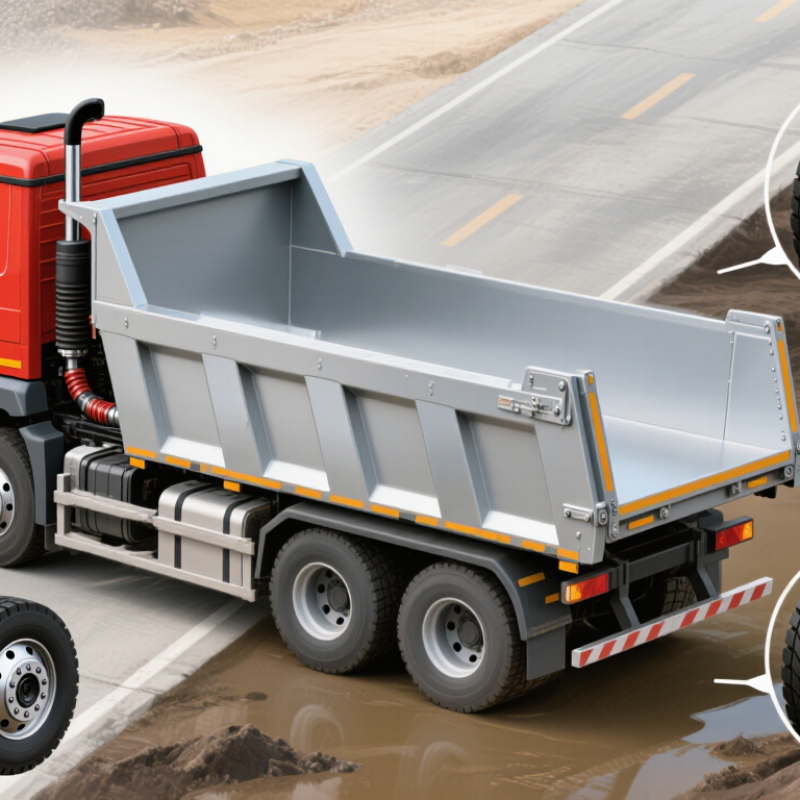
A side tipper truck carries bulk materials in a reinforced body. Unlike a rear dumper, it unloads by tilting the body to one side. Hydraulic cylinders lift the body from its chassis. Gravity then moves the load through the opened side. That simple action saves space on narrow sites. Less reversing. Operators control the tipping angle from the cab. Hydraulic valves regulate movement and reduce sudden shifts. On uneven ground, stability matters more than speed.
For global buyers, the best China side tipper truck starts with the job, not the brochure. Check payload, body volume, material density, road conditions, and daily cycle time. Coal, aggregate, soil, and agricultural products may need different body linings. High-strength steel can improve durability, but it may increase tare weight. Ask for load charts, hydraulic diagrams, axle ratings, and maintenance intervals. These documents make technical claims easier to verify. Request photographs of welds, hinges, cylinder mounts, and chassis reinforcement. Small details reveal manufacturing discipline.
During inspection, operate the body several times without a load. Listen for pump noise and watch for uneven lifting or oil seepage. Test it again with a controlled load. No design is perfect. Do not ignore the tailgate. It must open smoothly and latch securely during tipping. Some buyers focus heavily on purchase price. That can be a costly mistake when parts, training, or local service are limited. Real operating feedback is valuable, yet it is not always complete. A careful buyer should question both impressive promises and quiet omissions. Not always simple. Even a well-built truck needs correct loading and routine inspection.
Which China Side Tipper Truck Types Fit Different Transport Tasks?
What Is the Best China Side Tipper Truck for Global Buyers?
Which China Side Tipper Truck Types Fit Different Transport Tasks?
A standard side tipper suits sand, gravel, grain, and construction waste on paved or mixed roads. Its hydraulic cylinder lifts the body sideways, reducing unloading time beside narrow work areas. For heavy quarry material, choose a reinforced steel body with a strong subframe. A larger axle rating can improve stability, but it may increase fuel use and tyre wear. Semi-trailer side tippers fit long-distance bulk transport when a suitable tractor and turning space are available. Three-way tipping bodies offer more flexibility on uneven job sites, although their hydraulic systems need careful maintenance.
Tips: Match body volume with payload, not appearance. Check steel thickness, hydraulic pressure, axle ratings, brake configuration, and local service support. Ask for load tests, welding details, spare-part lists, and clear warranty terms. Confirm road dimensions before ordering. A beautiful truck can still be the wrong tool.
A common mistake is choosing the largest body for every route. I once underestimated how quickly overloading can damage suspension components and shorten tyre life. Buyers should compare real cargo density, road gradients, unloading frequency, and seasonal weather. In cold regions, hydraulic oil performance matters. In humid coastal areas, paint preparation and drainage deserve closer inspection. Request inspection records and independently verify key specifications. Supplier documents may contain errors, so practical checking remains essential.
What Technical Features Matter Most for Global Truck Buyers?
What Is the Best China Side Tipper Truck for Global Buyers?
For global buyers, technical fit matters more than a low purchase price. A reliable side tipper needs a strong frame, balanced axle loading, and a hydraulic system that works smoothly in dust, heat, and cold. The World Bank’s Logistics Performance Index 2023 highlights reliability and delivery timeliness as major logistics priorities. Therefore, buyers should inspect cycle time, hydraulic pressure stability, and unloading control. A fast body is useful. Uncontrolled movement is dangerous.
Braking performance deserves equal attention. Check compliance with applicable UNECE or local braking requirements, including loaded stopping performance and parking-brake strength. Telematics can record fuel use, overload events, service hours, and fault codes. This matters as IRU’s 2024 Global Driver Shortage Report estimated 3.6 million unfilled truck-driver positions across surveyed countries in 2023. Simpler controls may reduce training pressure. Still, I would not treat electronics as a substitute for skilled maintenance. That assumption can become expensive.
Tips: Request a payload test with real aggregate, not empty-road demonstrations. Examine welds around the subframe and hinge points. Confirm spare-parts lead times, hydraulic seal availability, and local technician training. Ask for corrosion protection details, especially for coastal routes. A thicker steel body can improve durability, but it also reduces payload. That trade-off is easy to overlook.
What Is the Best China Side Tipper Truck for Global Buyers?
Payload capacity and body volume are two of the most important technical benchmarks when selecting a side tipper truck for international operations. The figures below show representative working specifications commonly considered for different applications.
For global buyers, the best configuration should also match hydraulic tipping performance, frame strength, axle capacity, ground clearance, braking systems, corrosion protection, and local road regulations.
How Do China Side Tipper Trucks Compare in Quality and Cost?
What Is the Best China Side Tipper Truck for Global Buyers?
China side tipper trucks often compete through lower purchase prices and broad configuration choices. However, cost should not be judged at the port gate. The World Bank’s 2023 Logistics Performance Index gave China a score of 3.7 out of 5, ranking it 19th globally. This supports China’s strong manufacturing and logistics base, but it does not guarantee every truck meets the same standard. Buyers should inspect frame welding, hydraulic-cylinder sealing, axle ratings, and paint thickness. Small details matter.
Quality can be practical rather than perfect. Many Chinese manufacturers offer high-strength steel bodies, automated welding, and electronic braking systems. Yet component consistency may differ between factories. Request production photos, load-test records, and independent inspection reports. The ISO Survey reports millions of ISO 9001 certificates worldwide, but certification alone cannot prove long-term truck durability. It is evidence, not a verdict.
Cost comparisons need a five-year view. The International Energy Agency reports that heavy-duty vehicles remain major fuel consumers, so engine efficiency and payload stability directly affect operating expenses. A cheaper truck may lose value through higher maintenance, spare-parts delays, or weaker resale demand. UN Comtrade classifies many dump trucks under HS 8704.10, but that category does not separate side tippers by quality. This limitation deserves attention. Compare delivered cost, warranty response, local service access, and downtime records—not only the invoice.
How Can Buyers Select, Inspect, and Import the Right Model?
Choosing the best China side tipper truck starts with the job, not the brochure. Define payload, body volume, road conditions, axle limits, and unloading frequency. A 30-cubic-meter body may look efficient, but local roads may restrict its legal load. Check engine output, hydraulic cycle time, tire size, suspension design, and frame thickness. Request verified drawings and a complete specification sheet.
During inspection, compare the truck with the approved documents. Check welds around the tipping body, cylinder mounts, hinges, and subframe. Look for uneven paint, oil seepage, loose wiring, and poor door alignment. Request a cold start video and a loaded tipping test. An independent inspector should confirm serial numbers, dimensions, brakes, lights, and safety equipment. I once focused too much on hydraulic speed and missed a weak hinge detail. That mistake changed my inspection checklist.
Tips: Ask for factory test records, maintenance guidance, spare-parts lists, and warranty terms. Confirm whether replacement parts are available near your operating region. Before importing, verify customs documents, emissions requirements, road approval, insurance, and destination-country standards. Clarify Incoterms, payment stages, packing protection, and shipping responsibility in writing. Use a pre-shipment inspection before final payment. It costs less than correcting hidden damage after arrival. Some buyers still choose the cheapest offer. That can be an expensive lesson.
What Is the Best China Side Tipper Truck for Global Buyers? - How Can Buyers Select, Inspect, and Import the Right Model?
| Category | Configuration or Checkpoint | Typical Data or Recommended Range | What Buyers Should Verify |
|---|---|---|---|
| Model Selection | 4×2 side tipper | Approximate payload: 8–15 tonnes; body volume: 10–16 m³; engine output: 180–280 kW | Suitable for urban construction, lighter quarry work, and roads with lower legal weight limits. Confirm axle rating and local gross vehicle weight. |
| Model Selection | 6×4 side tipper | Approximate payload: 20–25 tonnes; body volume: 15–22 m³; engine output: 250–350 kW | A common balance between traction, payload, and operating cost. Check whether the selected body volume matches the density of the transported material. |
| Model Selection | 8×4 side tipper | Approximate payload: 30–40 tonnes; body volume: 20–30 m³; engine output: 330–450 kW | Recommended for high-volume quarry, mining, and infrastructure projects where local axle-load regulations permit four axles. |
| Model Selection | 10×6 heavy-duty side tipper | Approximate payload: 35–50 tonnes; body volume: 25–35 m³; engine output: 375–550 kW | Best for severe off-road duty and high-density materials. Confirm road legality, turning radius, bridge limits, and spare-parts availability before purchase. |
| Body Specification | Side-tipping body capacity | Common capacity range: 15–35 m³; side-tipping angle commonly about 40°–50° | Calculate capacity using material density. Inspect floor thickness, side-wall reinforcement, hinge design, locking system, and discharge clearance. |
| Powertrain | Engine and transmission | Diesel engines are commonly rated from approximately 180–550 kW; manual and automated manual transmissions are widely used | Match engine calibration and emissions certification to the destination market. Confirm transmission ratios, PTO compatibility, cooling capacity, and fuel quality requirements. |
| Chassis and Safety | Axles, suspension, braking, and stability | Heavy-duty leaf or air suspension; air braking is common; ABS may be required by the importing jurisdiction | Check axle-load plates, brake test results, ABS/EBS documentation, tire load ratings, rollover protection, side guards, lighting, and rear underrun protection. |
| Pre-Shipment Inspection | Mechanical and hydraulic inspection | Inspect before shipment at the stated production location; perform loaded and unloaded functional tests | Verify chassis and engine identification numbers, cold start, oil leaks, hydraulic-cylinder movement, tipping cycle, weld quality, tire condition, dashboard warnings, and underbody damage. |
| Documentation | Technical and shipping documents | Commercial invoice, packing list, sales contract, bill of lading, certificate of origin, warranty terms, and vehicle identification records | Ensure model, quantity, chassis number, engine number, dimensions, gross weight, and declared value are consistent across all documents. |
| Import Compliance | Destination-country approval | Requirements vary by country and may include type approval, emissions compliance, customs classification, roadworthiness testing, and registration inspection | Confirm rules with the local customs authority, transport regulator, and an authorized inspection agency before making the final payment. |
| Import Logistics | Shipping and delivery planning | Common options include roll-on/roll-off shipment, container shipment for suitable dimensions, or breakbulk shipment for oversized units | Compare freight, insurance, port handling, inland transport, demurrage, duties, taxes, and unloading costs. Confirm the truck’s dimensions and weight with the carrier. |
| Total Cost of Ownership | Operating and maintenance factors | Evaluate fuel consumption, tire wear, service intervals, hydraulic component life, insurance, local taxes, and expected annual operating hours | Request a parts list, maintenance schedule, warranty response procedure, diagnostic support plan, and a written supply lead time for critical components. |
