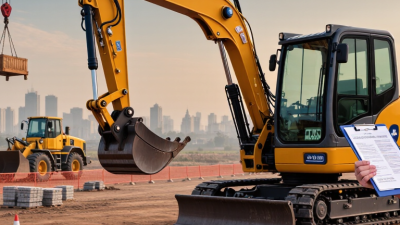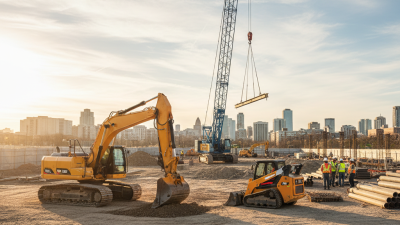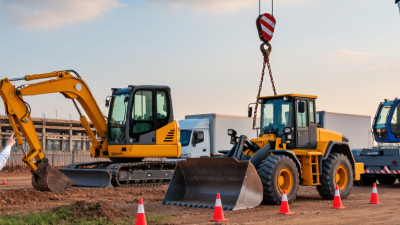
7 Best Construction Equipment Rental Companies Worldwide

Construction equipment rental can help contractors access machinery without committing large sums to ownership. It also offers flexibility when project schedules, site conditions, or workloads change. The right provider may supply excavators, loaders, lifts, and other equipment, along with delivery and maintenance support. Those services can affect a job’s pace as much as the machine itself.

This guide introduces seven construction equipment rental companies with operations or reach across different markets. Their scale, fleet mix, service networks, and rental terms are not identical. A company suited to a major infrastructure project may not fit a small renovation. Availability also varies by location, season, and equipment type. Details matter.

When comparing providers, look beyond headline prices. Check machine condition, operator requirements, transport arrangements, service response times, and the clarity of rental agreements. Ask how the company handles breakdowns and whether replacement equipment is available. These practical questions can prevent costly delays, though no checklist removes every risk. A ranking can offer a useful starting point, not a universal winner. Company information and local availability can change, so confirm current details directly before making a decision. Consider the project’s actual workload, site access, and timeline. The cheapest option may not be the best value if support is slow or delivery is uncertain. Choose with care.
7 Best Construction Equipment Rental Companies Worldwide

How Construction Equipment Rental Supports Projects Worldwide

Construction equipment rental helps projects respond to changing workloads without tying up capital in machines that may sit idle later. A road crew might need a compact excavator for trenching this week, then a lift for bridge repairs next month. Rental fleets can provide that flexibility across regions, where terrain, weather, and project schedules vary. Timing matters.

For remote sites, delivery planning is as important as machine availability. A loader arriving after a haul road becomes muddy can leave workers waiting and shift the schedule. Reliable providers coordinate transport, inspection, and maintenance support, while project teams should confirm access routes, fuel needs, and operator requirements before equipment moves. Small details count. A clear handover also helps crews understand controls, safety features, and service contacts.

Rental is not automatically cheaper. Long hire periods, transport charges, or a poor equipment match can raise costs. Teams should compare the expected hours of use with the full rental period, and ask how breakdowns are handled. Even a careful plan can miss something; site conditions change, and estimates are imperfect. Reviewing equipment needs as work progresses helps prevent unused machines from occupying valuable space beside the active work area.

How Construction Equipment Rental Supports Projects Worldwide

Estimated global construction equipment rental market value, 2023–2030 (USD billions)

The 2023 market estimate is about $111.8 billion. Later values are calculated using a reported 5.7% compound annual growth rate for 2024–2030, illustrating the sector’s projected expansion. Rental gives project teams access to equipment without purchasing every machine outright. Market estimates vary by research provider.

Source: Grand View Research, Construction Equipment Rental Market report; forecast values calculated from the reported base estimate and CAGR.

Criteria for Comparing Global Rental Companies

Comparing global construction equipment rental companies requires more than checking daily rates. A low quote may exclude delivery, minimum rental periods, cleaning, or fuel. Request an itemized estimate for the same machine, rental duration, and work location. Small details matter. A 20-ton excavator available nearby can cost less overall than one transported from another region.

Check fleet availability, maintenance records, and replacement procedures for breakdowns. Ask how quickly a technician can reach a remote site, and whether support operates outside standard business hours. Look for clear inspection reports, service intervals, and operator guidance. A polished fleet list is not proof that a specific machine will be ready on your start date. Confirm the model, attachments, and delivery window in writing.

Compare contract terms, insurance requirements, damage assessments, and cancellation charges before signing. These conditions can vary by country and project, so local review matters. Ask about training and equipment documentation relevant to the job site. Environmental options, such as lower-emission machines, may also affect availability and cost. No scorecard is perfect; weighting price too heavily can overlook downtime. Track response times and actual machine condition during a trial rental when possible.

Seven Leading Construction Equipment Rental Companies Worldwide

Worldwide leadership in construction equipment rental is not measured by fleet size alone. Grand View Research valued the global construction equipment rental market at about $120.3 billion in 2023 and projected 6.1% annual growth from 2024 to 2030. That growth reflects contractors’ need to control capital costs and secure machines when projects demand them.

A useful comparison of seven leading rental companies worldwide should assess local availability, equipment range, maintenance support, and delivery speed. Excavators, telehandlers, and aerial lifts must arrive ready for work, not merely appear in an online catalogue. Service coverage matters. A machine parked for repairs can disrupt an entire crew. Published fleet totals also deserve caution; companies may measure them differently, and scale alone says little about local reliability.

For a regional benchmark, the American Rental Association projected US equipment and tool rental revenue of $78.5 billion in 2024 and $80.5 billion in 2025. These figures describe the United States, not the global market, so they should not be treated as a worldwide ranking. Buyers comparing international providers should check branch access near project sites, replacement-machine policies, and clear rental terms. Some comparisons remain imperfect; regional reporting can make like-for-like assessment difficult.

Comparing Equipment Fleets, Services, and Geographic Reach

A useful comparison starts with fleet mix, not headline size. A contractor pouring a warehouse slab needs ready-mix trucks, pumps, and compactors; a road crew may need rollers and graders instead. Ask whether machines are available locally, recently maintained, and supported with replacement units. Also compare delivery windows, operator training, inspection records, and after-hours repair coverage. These details matter when a machine stops beside a live work zone. A clean comparison is harder than it looks: published fleet counts rarely use the same definition.

Geographic reach should mean dependable service, not just pins on a map. The American Rental Association’s 2024 Equipment Rental Industry Forecast estimated U.S. rental revenue at about $78.5 billion for 2024; that is a national forecast, not a worldwide market total. The World Bank’s 2023 Logistics Performance Index assessed 139 economies, reflecting how transport and border conditions vary between markets. For cross-border projects, ask where equipment is stocked, how parts are supplied, and who handles urgent repairs. Distance matters. Regional depots can outperform a broader footprint if local technicians and common attachments are available. Compare the fine print, too: some providers count partner locations as their own reach, which can make coverage appear stronger than it feels on site.

7 Best Construction Equipment Rental Companies Worldwide - Comparing Equipment Fleets, Services, and Geographic Reach

Comparative overview of seven major equipment-rental providers. Provider labels are anonymized; location counts and geographic coverage are approximate and reflect publicly reported information available around 2023–2025. The providers are not ranked.

Provider Geographic reach Approximate scale indicator Typical fleet strengths Services and capabilities Notable considerations
Provider 1 United States and Canada More than 1,500 rental locations reported across North America Broad general-construction range, including earthmoving equipment, aerial work platforms, and tools Equipment rental, delivery, maintenance support, specialty rentals, and used-equipment sales Particularly extensive branch coverage for large projects across North America
Provider 2 United States, Canada, the United Kingdom, and Australia More than 1,000 locations reported across its operating markets General construction equipment, access equipment, power solutions, and specialty tools Rental, equipment servicing, delivery, and solutions for projects requiring specialist equipment Useful for customers managing work across several English-speaking markets
Provider 3 United States and Canada More than 600 locations reported in North America Aerial work platforms, earthmoving machines, material handling equipment, and power generation Rental, repair and maintenance, delivery, and used-equipment sales A substantial North American network; international coverage is more limited than that of multi-continent operators
Provider 4 Europe and other markets across approximately 30 countries Approximately 1,000 or more branches and agencies reported across its network Earthmoving, access, lifting, temporary structures, and general construction equipment Short- and long-term rental, equipment transport, maintenance, and project-specific solutions One of the broader multi-country networks for equipment rental in Europe
Provider 5 More than 25 European countries More than 750 branches reported across Europe Construction machinery, access platforms, site equipment, tools, and event equipment Rental, delivery, maintenance, and equipment for construction, industrial, and event use Strong European branch coverage, with particularly broad service availability in its core markets
Provider 6 Seven European countries More than 600 branches reported across its network Earthmoving, access, handling, compaction, and general construction equipment Equipment rental, delivery, maintenance, and services for construction and industry Dense coverage in several European markets, but a narrower country footprint than pan-European peers
Provider 7 More than 80 countries through operations and project support Global specialist operation; conventional branch-count comparisons are not directly comparable Temporary power generation, temperature control, and related project equipment Rental, engineering, installation, operation, and maintenance for temporary utility requirements Best suited to power and climate-control needs rather than a full general-construction fleet

Note: Branch counts, country coverage, and service offerings can change over time and may be defined differently by each provider. Confirm local fleet availability, delivery charges, and service terms directly before renting.

Choosing a Rental Company for a Construction Project

Choosing a rental company starts with the work, not the machine list. A compact excavator may suit a narrow urban lot, while a larger site may need a loader with more capacity. Share the project schedule, ground conditions, access limits, and expected daily hours. Specific details help the rental team recommend equipment that fits instead of simply offering the biggest option. Small details matter.

Check how delivery, operator training, maintenance, and breakdown support are handled. Ask who to call if a warning light appears at 6 a.m., and how quickly a replacement machine could reach the site. Read the rental terms closely, especially charges for transport, fuel, cleaning, and late returns. A low daily rate can become costly when the schedule changes. That happens more often than planners expect.

Compare companies on equipment condition and communication, not price alone. Ask when the machine was last inspected and whether service records are available. If possible, examine the controls, tires or tracks, and visible hydraulic lines before accepting delivery. Take photos of existing damage. Also confirm that the machine can fit through the site entrance; a measurement missed by a few centimeters can delay work. No checklist catches everything, and I would still leave room for a practical conversation with the site crew before booking.