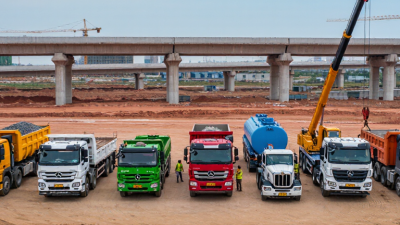
What Are the Best Construction Trucks Made in China?
China offers a wide range of construction trucks, from heavy-duty dump trucks to concrete mixers and tractor units. Yet “best” depends on the worksite, not the badge alone. A truck hauling wet soil through steep, muddy access roads faces different demands from one delivering aggregates on paved routes. Payload, axle configuration, ground clearance, braking, fuel use, and local parts support all matter.
The market’s scale provides useful context. The China Association of Automobile Manufacturers reported about 3.87 million commercial vehicles sold in China in 2024, a year-on-year increase of 3.9%. That figure covers commercial vehicles broadly; it is not a count of construction trucks specifically. Still, it signals a large manufacturing base, with established names such as SINOTRUK, FAW, Dongfeng, and Shaanxi producing heavy trucks for demanding applications. Scale is not proof of quality.
This guide compares Chinese construction trucks by practical criteria: rated payload, engine and transmission choices, chassis durability, safety features, operating costs, and after-sales coverage. It also considers whether specifications suit real conditions, such as frequent stop-start cycles, long gradients, or dusty quarry roads. Published figures deserve a careful read. A brochure cannot tell you how quickly a dealer supplies a replacement part, and the cheapest purchase price may not mean the lowest lifetime cost. The strongest choice is the one that fits the route, load, maintenance capacity, and budget.
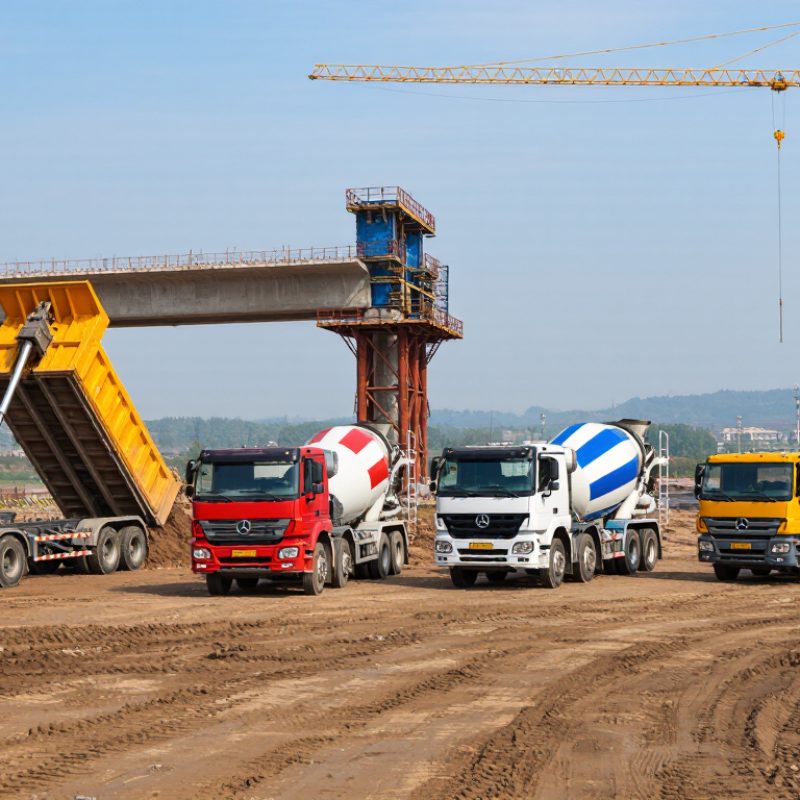
What Makes a Construction Truck Suitable for Heavy-Duty Work?
A construction truck is suitable for heavy-duty work when its chassis, powertrain, and braking system can handle repeated loads—not just a single impressive haul. Start with the rated payload, then consider the weight of tools, attachments, and unevenly distributed material. Engine torque matters on steep, muddy access roads. So does a transmission that can move slowly without overheating. The truck must stop safely, too.
Worksite conditions often reveal weaknesses that a brochure cannot. A reinforced frame helps on rough ground, while suitable ground clearance reduces underbody strikes. Check tire type, axle capacity, suspension, and cooling performance against the actual route and load. Visibility from the cab matters near workers and equipment. Service access is practical, not glamorous. A truck that is difficult to maintain may spend more time parked. Specifications still need real-world checking.
Tips: Compare the truck’s rated capacity with your heaviest routine load, not its best-case figure. Inspect the frame, tires, brakes, and fluid leaks before purchase. If possible, test it loaded on a representative route. Small details get missed; review the inspection twice.
Main Types of Construction Trucks Made in China
Construction trucks made in China cover several practical roles. Dump trucks move soil, gravel, and demolition debris; their raised beds unload quickly, but soft ground can still limit access. Concrete mixer trucks keep fresh concrete turning during delivery. On tight sites, their turning radius and drum capacity matter as much as advertised output. Concrete pump trucks place concrete at height or beyond obstacles, using a boom and delivery pipes. They need room to set up safely.
Truck-mounted cranes lift materials such as steel sections, formwork, and equipment. Water tankers help control dust and supply water around active work areas. Tractor trucks with heavy-duty trailers carry excavators and other machinery between sites. These are the main types, though configurations vary by payload, chassis, and working conditions. Details matter. A truck that performs well on paved roads may struggle on muddy access tracks. Buyers should compare axle layout, load capacity, fuel use, parts availability, and local maintenance support. The specifications deserve a close read; capacity figures alone do not tell the whole story. A small mismatch between site conditions and truck design can mean slower work and higher upkeep.
What Are the Best Construction Trucks Made in China?
Main types compared by representative rated payload
Typical payloads are approximate examples, not universal specifications. Actual capacities vary by model, configuration, and applicable road limits. Mixer-truck payload refers to the approximate weight of its concrete load.
Leading Chinese Manufacturers and Their Notable Models
China’s leading construction-truck makers compete across dump trucks, tractor units, and specialized chassis. Their notable offerings are easier to compare by configuration than by badge: 6×4 dump trucks suit many mixed-road jobs, while 8×4 versions carry larger loads on suitable routes. For hauling machinery, heavy-duty tractor units paired with low-bed trailers are a common choice. That matters.
China’s Association of Automobile Manufacturers reported about 4.03 million commercial vehicles sold in 2023, a 22.1% year-on-year increase. This figure covers the broad commercial-vehicle market, not construction trucks alone, so it should not be treated as a construction-truck ranking. Buyers should compare payload ratings, axle layouts, engine output, and service access. In practice, a truck that looks strong on paper can lose time if parts are scarce near the worksite.
For urban projects, shorter wheelbases and tighter turning circles can make a loaded 6×4 easier to maneuver. Quarry operators may favor reinforced frames, larger cooling capacity, and tires matched to rough ground. A 8×4 dump truck can offer greater carrying capacity, but its suitability depends on road conditions and site requirements. Not glamorous. I would avoid calling any single configuration “best”; fuel use, maintenance intervals, and driver comfort vary with the job. Check the actual specification sheet, not just the brochure.
How Chinese Construction Trucks Compare in Performance and Cost
Chinese construction trucks can offer strong value, but performance varies by vehicle class, configuration, and intended workload. For a buyer comparing options, engine output matters less than usable torque at low speeds. A loaded dump truck climbing a muddy access road needs steady pulling power, reliable cooling, and a transmission suited to frequent stops. On flatter sites, fuel use and payload capacity may matter more.
Purchase prices are often competitive, yet the sticker price tells only part of the story. Compare fuel consumption, service intervals, tire costs, and the local supply of filters and brake parts. A truck that sits idle for several days while waiting for a component can erase early savings. Check technician access too. It matters.
Ask for documented load ratings and maintenance records, then test the truck under conditions close to your own work. Look for stable braking on a descent, clear visibility around the cab, and comfortable controls during a full shift. Published specifications are useful, but they do not show every weakness. Some comparisons also overlook resale value and operator training. That is a real gap. The best choice is the truck whose verified performance and support match the job, not simply the lowest quote.
What Are the Best Construction Trucks Made in China? - How Chinese Construction Trucks Compare in Performance and Cost
The comparison below covers common truck types rather than individual manufacturers or brands. Specifications and prices are indicative ranges for new vehicles; actual figures vary with configuration, engine, emissions requirements, exchange rates, and market.
| Truck type | Typical configuration | Typical capacity | Typical engine power | Indicative new-vehicle price (USD) | Performance and cost considerations | Best suited to |
|---|---|---|---|---|---|---|
| Medium-duty dump truck | 4×2 or 6×4 rigid chassis | Approximately 5–15 tonnes payload | About 160–280 hp | $25,000–$50,000 | Lower purchase and operating costs than heavier dump trucks; limited payload and traction for demanding, rough-site work. | Urban construction, smaller earthworks, and short-haul material delivery |
| Heavy-duty dump truck | Commonly 6×4 or 8×4 rigid chassis | Approximately 15–30 tonnes payload, depending on chassis and local legal limits | About 300–460 hp | $40,000–$90,000 | A versatile balance of payload, power, and price. Fuel use, tire wear, and maintenance rise with heavier loads and rough conditions. | Road construction, quarries, and general site hauling |
| Concrete mixer truck | Typically 8×4 chassis with rotating drum | Usually 8–12 m³ drum capacity | About 300–430 hp | $50,000–$110,000 | Drum capacity, chassis rating, and delivery conditions affect usable load. The drum and hydraulic system add maintenance requirements. | Ready-mix concrete delivery to building and infrastructure sites |
| Heavy tractor unit | Commonly 6×4 road tractor; trailer selected separately | Designed for heavy combination loads; legal gross combination limits depend on the country and trailer | About 350–550 hp | $40,000–$100,000 for the tractor unit | Efficient for longer-distance hauling when matched to the right trailer. Total cost depends heavily on trailer, fuel, tires, and service support. | Moving bulk materials, machinery, and construction equipment between sites |
| Off-highway mining dump truck | Purpose-built rigid mining chassis; not intended for ordinary public roads | Often approximately 30–90 tonnes payload, with larger classes available | Roughly 400–1,000+ hp, depending on size and drivetrain | Approximately $150,000–$700,000+; highly configuration-dependent | High hauling capacity can reduce trips in suitable mines, but purchase price, specialized tires, fuel, and maintenance are substantial. | Large quarries and mining operations with dedicated haul roads |
Price ranges are broad indicative estimates for new vehicles and may exclude freight, import duties, taxes, dealer charges, and specialized equipment. Compare payload against local axle-load rules and evaluate fuel economy, parts availability, warranty coverage, and service access before purchasing.
Choosing the Right Chinese Construction Truck for Specific Jobs
Choosing a Chinese construction truck starts with the job, not the cab’s appearance. For quarry hauling, compare payload, axle layout, ground clearance, and braking performance. A short, muddy access road may demand better traction than a higher top speed. For ready-mix delivery, check drum capacity, chassis stability, and whether the truck can maneuver around tight site entrances. Fit comes first.
For lifting materials, a truck-mounted crane needs suitable reach and lifting capacity at the required distance. Check the load chart, stabilizer footprint, and available setup space. A rated capacity alone can mislead. The same truck may handle a load safely near the mast but not at full reach. Ask for operating manuals and confirm that safety systems match the intended work.
Before purchase, compare the truck’s rated payload with the actual materials and routes it will face. Review service access, spare-parts supply, warranty terms, and local emissions and road requirements. If possible, inspect a working unit and test it on a representative route, including a loaded climb or uneven ground. I would not choose by price alone; that is an easy mistake. A small detail, such as tire availability, can keep a truck idle for days.
Related Posts
-
What Are China's Top 10 Construction Truck Manufacturers?
-
Top 2025 Mini Excavators: Features, Prices, and Buying Guide
-
Why is Construction Equipment Rental the Best Choice for Businesses?
-

What is Construction Equipment and Its Importance in the Industry?
-
What Is an Excavator Machine and How Does It Work?
-
How to Find the Best Heavy Equipment Salvage Yard Near You?