
How to Choose a Burr Oak Fin Press in 2026?
Choosing a Burr Oak Fin Press in 2026 requires more than comparing tonnage, speed, and price. The machine must match fin material, strip thickness, pitch, louver geometry, and production volume. A press that runs smoothly on aluminum may struggle with copper or thicker stock. Small differences matter. They affect scrap, tool wear, noise, and heat-exchanger performance.
The International Energy Agency reports that global cooling demand could more than triple by 2050, increasing pressure on manufacturers to improve efficiency and production capacity. The U.S. Department of Energy also identifies advanced manufacturing and process efficiency as important paths toward industrial energy reduction. These trends give fin-press selection greater importance. However, market forecasts do not replace a factory trial. They cannot reveal burr formation at 180 strokes per minute.
Dr. Eckhard Groll, a respected refrigeration engineering authority, has emphasized the importance of balancing thermal performance with pressure-drop control: “Good heat-exchanger design requires both heat transfer and hydraulic efficiency.” That principle also guides the choice of a Burr Oak Fin Press. Accurate feeding, repeatable forming, rigid construction, and accessible maintenance directly influence the finished coil.
Look closely at the details. Check the feeder’s grip marks. Measure fin pitch after production. Listen for vibration near the die station. Ask whether spare tooling and technical support are available locally. Burr OAK Tool’s established experience is valuable, but brand reputation alone is not enough. A perfect specification sheet can still disappoint on the factory floor. This guide examines the practical criteria buyers should question before choosing a Burr Oak Fin Press for 2026.
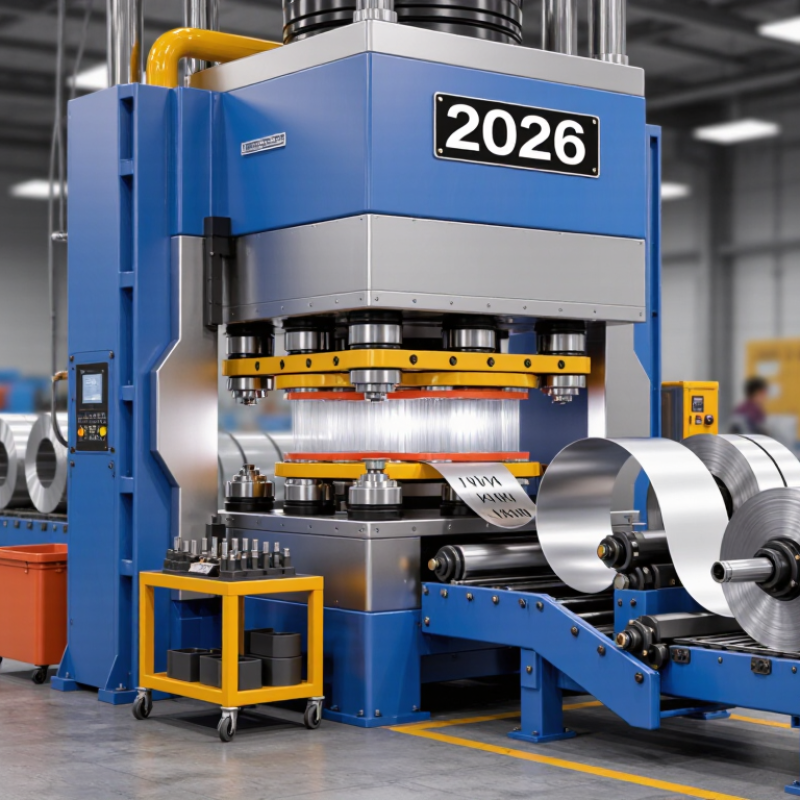
Define ASTM B209 Aluminum: 0.08–0.30 mm Stock and 1.5–3.2 mm Pitch
How to Choose a Burr Oak Fin Press in 2026?
When selecting a burr oak fin press, begin with the aluminum specification, not the machine’s appearance. ASTM B209 covers aluminum and aluminum-alloy sheet and plate requirements. It does not automatically define your fin pitch or forming results. Request the material grade, temper, thickness tolerance, and inspection records from the supplier.
For 0.08–0.30 mm stock, feeding accuracy becomes critical. Thin aluminum can wrinkle near the entry guide or stretch around a sharp forming radius. A practical press should offer stable strip control, adjustable die clearance, and precise pilot alignment. The target pitch, 1.5–3.2 mm, also needs careful tooling design. Smaller pitches demand cleaner cutting edges and tighter synchronization between feeding and forming.
Check samples under actual production conditions. Measure pitch across several fins, not just one section. Inspect burr height, fin height, flatness, and edge tearing. Keep the strip clean. Tiny particles can mark this thin material.
Do not trust a catalog number alone.
I once focused too much on maximum speed and overlooked feed variation. The first trial produced acceptable fins, but inconsistent spacing appeared after longer runs. That mistake changed my evaluation method. Ask for a sustained test, temperature records, and maintenance access. A slower press with repeatable control may produce better usable output than a faster machine with unstable feeding.
Match Press Tonnage to Fin Height, Width, Pitch, and ISO 6892-1 Strength Data
Choosing a fin press in 2026 starts with force, not catalog speed. On the shop floor, fin height, width, and pitch change how much metal enters the die at once. A 50 mm fin needs more forming travel than a 25 mm fin. Wider strips increase simultaneous contact. Tight pitch raises tooth count and friction. Small geometry changes matter.
Use ISO 6892-1 tensile data from the actual coil, not a generic alloy table. The standard defines tensile testing and reports values such as Rp0.2 and Rm. The Aluminum Association’s Aluminum Standards and Data lists approximate proof strengths near 145 MPa for 3003-H14 and 240 MPa for 6061-T6, depending on thickness and product form. ASM Handbook, Volume 14B, also warns that temper, thickness, and processing affect aluminum behavior. These figures are inputs, not guaranteed press loads.
A practical estimate multiplies projected forming or cutting area by measured flow strength, then adds die friction and a realistic safety margin. For example, a 1,000 mm strip with 2.5 mm pitch may engage hundreds of features per stroke. Do not select tonnage from strip width alone. My early estimate was too optimistic because it ignored springback and uneven coil hardness. Validate the selection with a load-cell reading, a monitored trial, and the die-load curve. Leave headroom, but avoid excessive tonnage; it can hide poor alignment and accelerate die wear.
Compare Output Using Strokes/Minute, Feed Rate, and an 85% OEE Target
Choosing a burr oak fin press in 2026 requires more than comparing its maximum speed. Compare usable output through strokes per minute, feed rate, and OEE. A press running at 40 strokes per minute may produce four fins per stroke. Its theoretical output is 160 fins per minute. At an 85% OEE target, practical good output falls to about 136 fins per minute. The OEE Foundation identifies 85% as a widely used world-class benchmark, although real factories often perform below it.
Feed rate must match the material, pitch, and forming depth. For example, a 1,200 mm/min feed rate may look attractive, but unstable feeding can create burrs, pitch errors, or short stops. Measure actual cycle data during a full shift, not only during a demonstration. ISO 22400 recommends structured production-performance measurement, including availability, performance, and quality. That matters because a faster press can lose its advantage through scrap and frequent die adjustments. I have seen spreadsheets promise excellent output, while operators record slower, safer settings. That gap deserves attention.
Tips: Record strokes, feed speed, downtime, and rejected fins separately. Calculate good parts, not theoretical parts. Ask for a three-shift trial using your material. Check whether the 85% OEE target includes planned maintenance. It should. Also, leave room for human error; perfect settings rarely survive Monday morning.
Verify ISO 12100 Guarding, OSHA 1910.212, and CE Documentation
How to Choose a Burr Oak Fin Press in 2026?
When selecting a burr oak fin press, guarding should come before speed, pressure, or finish quality. ISO 12100 requires a documented risk assessment covering crushing, shearing, entanglement, and unexpected startup hazards. Inspect the machine physically. A fixed guard should block access to moving tooling, while an interlocked guard should stop motion when opened. The gap around the press matters. Small openings can still expose fingers.
OSHA 1910.212 requires machine guarding wherever employees face hazards from points of operation, rotating parts, or flying materials. The U.S. Bureau of Labor Statistics reported 5,283 fatal work injuries in 2023, reinforcing the cost of weak hazard controls. That figure does not describe fin presses specifically, but it deserves attention.
Ask for measured stopping time, guarding drawings, and test records. Do not accept “safety-ready” as evidence.
CE documentation should include the Declaration of Conformity, risk assessment, technical file references, operating instructions, and applicable standards. For machinery placed on the European market in 2026, verify the relevant conformity route and current legal framework. Check that the serial number matches every document.
One detail is easy to miss. Translated manuals may omit emergency-reset instructions or maintenance limits.
I would also test the emergency stop during commissioning, then record the result. Paperwork alone cannot prove safe design. A clean document package can still hide an awkward access point.
(Sources: ISO 12100:2010; OSHA 29 CFR 1910.212; U.S. BLS, Census of Fatal Occupational Injuries, 2023.)
Choose by Die Life, Changeover Minutes, Energy Use, and Five-Year TCO
How to Choose a Burr Oak Fin Press in 2026?
A reliable fin press should be judged beyond its purchase price. Start with die life. Ask for tested cycle data, material limits, and maintenance records. A die that lasts 1.5 million cycles may outperform a cheaper die requiring replacement every 600,000 cycles. Inspect wear surfaces, guide posts, and forming edges. Small burrs can become expensive defects.
Changeover time affects every production shift. Measure the full process, including die removal, alignment, trial pieces, and quality approval. A ten-minute reduction per changeover can recover hundreds of hours yearly. Energy use also deserves direct measurement. Review motor ratings, standby consumption, compressed-air demand, and heating requirements. My first estimate was too optimistic. Real energy bills exposed idle losses that brochures did not show.
Tips: Build a five-year TCO sheet. Include the press, dies, tooling repairs, electricity, labor, scrap, training, and downtime. Use your actual shift schedule, not an ideal production plan. Request service intervals and spare-part prices in writing. Compare at least three operating scenarios. A low-volume shop may value quick changes, while continuous production may prioritize die life. Leave room for mistakes. Forecasts are useful, but imperfect. Check the assumptions every quarter.
