How to Choose the Best Construction Trucks for Your Needs?
When selecting the best construction trucks, one must carefully consider various factors. Experts in the industry, like Mike Anderson, a veteran in construction equipment, emphasize the importance of suitability for specific tasks. "The right construction truck can enhance efficiency and ensure safety on job sites," he states.
Construction trucks come in many shapes and sizes. Each type serves unique purposes, from hauling materials to transporting heavy equipment. Understanding your project requirements is critical. A good construction truck should align with your workload and terrain. Reliability is essential, as downtime can be costly.
Choosing construction trucks can be overwhelming. There's a wide range of options available. Potential buyers often face challenges in assessing their specific needs. Making an uninformed choice could lead to inefficiencies. Careful research and expert consultation are necessary to avoid common pitfalls.
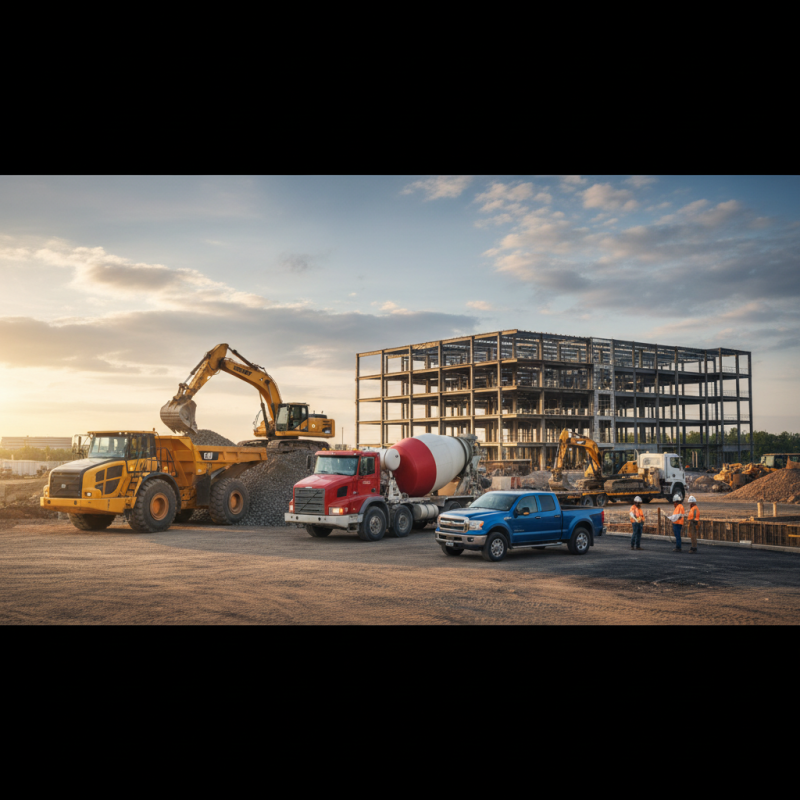
Understanding Different Types of Construction Trucks Available
When selecting the ideal construction trucks, understanding the various types available is essential. Construction trucks vary widely, each designed for specific tasks. Dump trucks excel in transporting heavy materials like gravel or dirt. They are perfect for jobs requiring bulk material movement. Flatbed trucks provide versatility for carrying oversized items, such as construction equipment or steel beams. Their open design allows for easy loading and unloading.
Concrete mixers are another specialized type. They combine transportation and mixing, offering efficiency on job sites. This ensures fresh concrete delivery directly where it’s needed. Crane trucks are vital for projects requiring heavy lifting. Equipped with a crane, they can place materials precisely. These trucks enhance productivity but also require skilled operators.
Understanding your specific needs is crucial. Assess your typical job requirements to choose the right type. Reflect on your project size and material demands. Remember, using the wrong type can lead to inefficiencies. This can increase costs and delay schedules. Each truck type has its pros and cons. Careful consideration can make a significant difference in your projects.
How to Choose the Best Construction Trucks for Your Needs? - Understanding Different Types of Construction Trucks Available
| Truck Type |
Payload Capacity |
Typical Use |
Fuel Type |
Key Features |
| Dump Truck |
10-20 tons |
Construction, Mining |
Diesel |
Hydraulic bed, Durable chassis |
| Flatbed Truck |
15-30 tons |
Transporting materials |
Diesel, Gasoline |
Open design, Versatile loading |
| Concrete Mixer Truck |
6-10 cubic meters |
Ready-mix concrete delivery |
Diesel |
Rotating drum, Insulated |
| Cement Truck |
10-15 tons |
Cement mixture delivery |
Diesel |
Pneumatic system, Airtight design |
| Crane Truck |
10-60 tons |
Heavy lifting |
Diesel |
Extendable boom, Stabilizers |
Assessing Your Project Requirements and Truck Capabilities
When choosing construction trucks, understanding your project requirements is crucial. Consider the nature of the tasks ahead. Will you transport heavy materials or navigate tight urban spaces? Each truck offers unique features tailored for specific tasks. Knowing your needs helps in making informed decisions.
Assess the truck's capability in relation to your workload. Look at load capacity, engine power, and fuel efficiency. A robust truck may handle heavy loads, but not all projects require such strength. Contemplate road conditions and terrain types. Some trucks excel on rough terrain, while others perform better on paved roads.
These considerations reveal insights about your choices and the potential for misjudgment. Perhaps a truck seems perfect but lacks needed functionality. Sometimes, visualizing the job site layout helps clarify your needs. Not all trucks meet every aspect of your requirements, so thorough evaluation is essential.
Evaluating Load Capacity, Durability, and Performance Features
When selecting construction trucks, evaluating load capacity is critical. According to a recent report by the Construction Industry Research Board, trucks often range from 1,000 to 15,000 pounds of load capacity. A truck with a higher capacity can significantly enhance efficiency. Yet, it’s essential to assess your project needs. If your typical payload is on the lower end, investing in a high-capacity truck may not be justifiable.
Durability is another crucial factor. Construction vehicles face tough environments. An analysis from the Heavy Equipment Manufacturers Association indicates that trucks deployed in rugged terrains experience 30% more wear. Therefore, choosing trucks made with high-strength materials can prolong their lifespan. However, frequent maintenance often gets overlooked. Ignoring this can result in unexpected breakdowns, leading to costly delays.
Performance features should also be prioritized. Features such as engine power and transmission type can affect handling. A study from the Truck Performance Metrics Institute found that trucks with advanced transmission systems improve fuel efficiency by up to 20%. Yet, not all operators are familiar with these advancements. Understanding how to utilize these features is vital yet often neglected, which can diminish performance.
Budget Considerations and Cost of Ownership for Construction Trucks
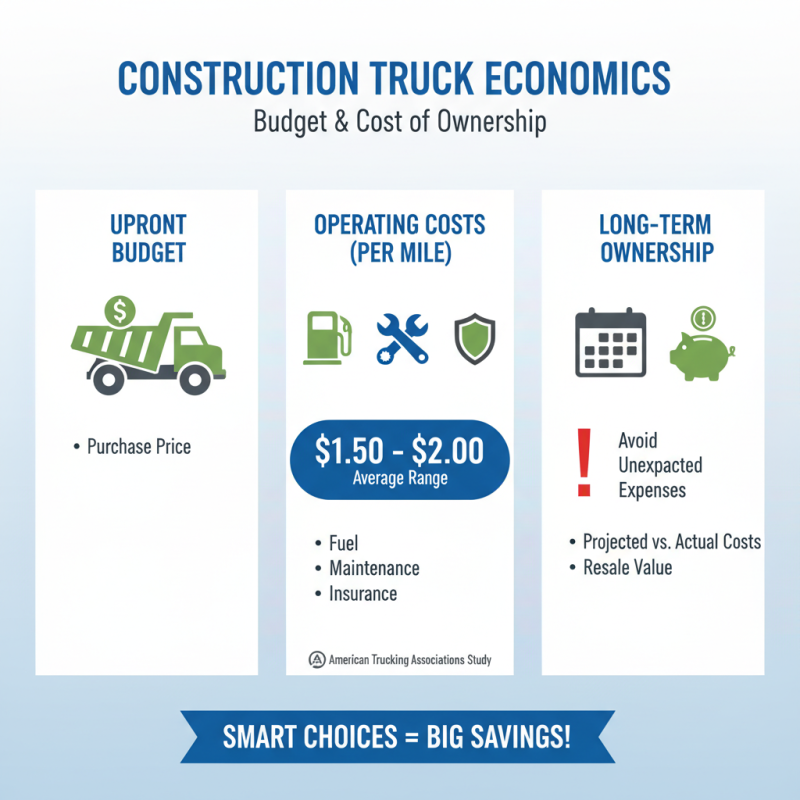
When it comes to choosing construction trucks, budget considerations and cost of ownership play crucial roles. According to a study by the American Trucking Associations, the average cost of operating a truck can range from $1.50 to $2.00 per mile. This figure includes fuel, maintenance, and insurance costs, which can significantly impact your project's budget. Assessing these factors is vital to avoid unexpected expenses.
Make sure to consider depreciation as well. Trucks typically lose around 15-20% of their value in the first year. This loss affects resale value and overall ownership costs. It's also important to factor in how often the truck will be used. A truck that runs frequently will incur higher maintenance costs than one that is seldom used.
Tips: Investigate warranty options before making a purchase. A good warranty can minimize repair costs in the long run. Additionally, consider fuel efficiency ratings. Trucks with better fuel economy can save money on fuel expenses over time. Lastly, don't forget to assess the anticipated mileage. This can help you choose a truck that balances initial cost and long-term ownership expenses effectively.
Exploring Brand Reputation and After-Sales Support Services
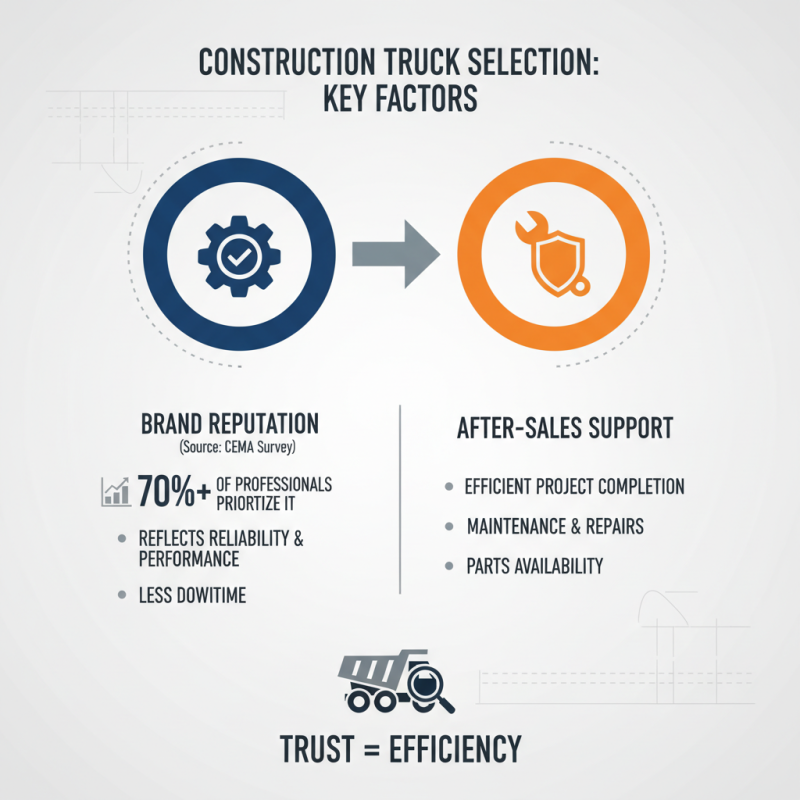
When selecting a construction truck, brand reputation and after-sales support services are crucial factors. A strong brand reputation often reflects reliability and performance. According to a recent survey by the Construction Equipment Manufacturers Association, over 70% of professionals prioritize brand reputation when purchasing equipment. Trust in a brand means less downtime and more efficient project completion.
After-sales support is equally important. A report from the National Association of Heavy Equipment Dealers reveals that 65% of customers value responsive support services after the sale. This includes warranty offerings, maintenance, and access to parts. A lack of proper support can lead to prolonged equipment failures, impacting project timelines. Moreover, the average cost of equipment downtime can reach $500 per hour, highlighting the need for reliable support.
Make sure to critically assess service options before buying. Some brands may seem appealing initially, yet their support services may lag. Consider feedback from current users. Real experiences can expose hidden reliability issues. Balancing brand reputation and after-sales support will lead to informed decisions.