China Top Equipment Parts Suppliers for Global Buyers
China has become a major sourcing destination for equipment parts used in construction, agriculture, mining, manufacturing, and material handling. Global buyers can find engine components, hydraulic assemblies, filters, bearings, electrical units, undercarriage parts, and custom-machined products through established Chinese suppliers. However, product variety alone does not guarantee a reliable purchase.
This guide examines China’s top equipment parts suppliers from a buyer’s practical perspective. It considers manufacturing experience, quality-control systems, technical capability, export records, certifications, and customer support. Clear product specifications matter. So do drawings, material grades, tolerance requirements, packaging details, and replacement references. A professional supplier should provide traceable documents, inspection reports, and realistic delivery schedules. Factory audits, sample testing, and third-party inspections can reveal problems before shipment. Small details matter.
Price deserves careful attention. An unusually low quotation may reflect different materials, weaker testing, or incomplete service. Communication can also be imperfect, especially when technical terms are translated poorly. Buyers should confirm every measurement and performance requirement in writing. No supplier is perfect. Even experienced manufacturers may need correction after receiving field feedback.
The following overview helps global buyers compare suppliers with greater confidence. It focuses on dependable sourcing rather than attractive claims alone. By reviewing production capacity, customization options, quality consistency, logistics experience, and after-sales responsiveness, purchasing teams can make more informed decisions. Strong partnerships develop through evidence, clear communication, and repeated performance—not promises.
What Defines a Reliable Equipment Parts Supplier in China
A reliable equipment parts supplier in China proves value through consistent details, not attractive promises. In practical sourcing, the first test is technical understanding. The supplier should read drawings, confirm dimensions, and question unclear tolerances before production begins. They should also explain material choices in plain language. Details matter.
Professional suppliers keep controlled records for each batch. These records may include material certificates, inspection results, machining dates, and operator details. A buyer should receive clear photos of critical measurements, such as shaft diameter or mounting-hole spacing. Independent inspections can add confidence before shipment. However, inspection cannot replace good manufacturing control.
Reliability also appears when something goes wrong. A delayed shipment, incorrect surface finish, or missing component reveals the supplier’s real attitude. Strong suppliers respond with a cause analysis, corrective action, and a realistic replacement plan. They do not hide behind vague promises. Communication should remain steady across time zones, especially when production changes. Records matter.
Experience has taught many buyers to test a supplier with a small order first. This exposes packaging weaknesses, unclear labeling, or slow technical replies. It may feel inefficient, but early friction is useful evidence. A supplier handling pressure calmly is often safer for long-term cooperation. Still, no evaluation is perfect; market conditions, staff changes, and material shortages can affect performance. Rechecking quality periodically remains necessary.
Major Equipment Parts Categories Available from Chinese Suppliers
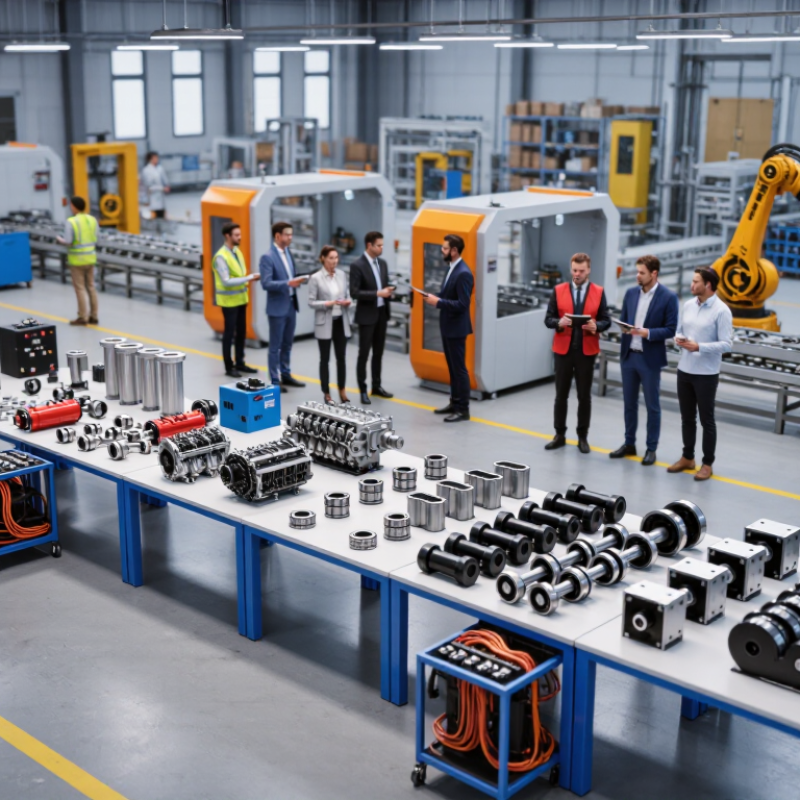
Chinese suppliers offer several major equipment parts categories for global buyers. Construction and mining customers commonly source hydraulic cylinders, pumps, filters, seals, undercarriage parts, and wear plates. Agricultural machinery requires bearings, belts, PTO components, cutting parts, and engine service kits. Material-handling fleets often need wheels, rollers, brake assemblies, and electrical controls. The selection is wide, but catalog size proves little. UNIDO data shows China produced about 31.6% of global manufacturing value added in 2023, supporting its strong industrial supply base.
Industrial buyers can also source motors, gearboxes, sensors, pneumatic valves, cable assemblies, and replacement control cabinets. The International Energy Agency reports that electric motor systems consume more than 40% of global electricity and about 70% of industrial electricity. Efficient, compatible components therefore matter. Experienced buyers request drawings, material certificates, load ratings, tolerances, and sample inspection records. ISO 9001 certification supports process control, but it cannot guarantee every shipment. That distinction is often missed.
Tips: Match each part to the machine model, duty cycle, temperature, and operating hours. Request traceable batch numbers and realistic lead times. Compare failure rates, not only unit prices. The World Bank’s 2023 Logistics Performance Index gave China a score of 3.7, ranking it 19th globally. Logistics remain capable, but delays still happen. I have seen buyers overlook packaging and corrosion protection. It seems minor until damaged parts arrive.
How Global Buyers Can Evaluate Chinese Equipment Parts Suppliers
Global buyers evaluating Chinese equipment parts suppliers should begin with evidence, not polished catalogs. Ask for material certificates, dimensional reports, process records, and recent inspection photos. A reliable supplier explains tolerances, heat treatment, surface finish, and packaging methods in clear technical language. Request a sample part before approving a large order. Measure it independently, including hole position, hardness, and weight. Small details matter.
Experience shows that communication quality often predicts delivery performance. Send the same drawing and requirements to several suppliers, then compare their questions. A capable engineering team notices missing tolerances or unclear revisions. It should suggest practical corrections without changing the design silently. Check factory capacity, quality-control roles, traceability procedures, and export documentation. A video call can reveal production flow, but it is not a full audit. I once treated a confident presentation as proof of capability; that judgment was weak.
Evaluate commercial reliability through written quotations, lead-time assumptions, payment terms, warranty limits, and corrective-action procedures. Ask how rejected parts are isolated and replaced. Contact recent customers where possible, and verify whether references match your application and order size. Independent inspection before shipment adds cost, yet it can protect a critical project. Do not judge only by the lowest price. Cheap parts can create installation delays, rework, or unsafe equipment operation. Your checklist may miss something. Review it after every sample, complaint, and delivery.
Key Quality, Certification, and Compliance Requirements
Global buyers should evaluate Chinese equipment parts suppliers through evidence, not attractive catalogs.
A reliable supplier can provide material certificates, batch numbers, inspection records, and controlled production procedures.
Ask whether certificates match the exact part, material grade, and production date. A generic document is not enough.
Quality systems such as ISO 9001 can indicate controlled processes, but certification alone cannot prove every shipment is consistent.
Request dimensional reports for critical parts, including tolerance results from calibrated measuring tools.
For electrical or machinery components, check applicable requirements such as CE, UKCA, RoHS, or REACH, depending on the destination and product use.
Compliance claims must reflect the current market rules.
A practical audit may include reviewing samples, factory records, packaging labels, and corrective-action reports.
Check that the part number on the box matches the drawing and purchase order.
One overlooked tolerance can stop an assembly line. It happens.
Suppliers should also explain traceability from raw material to final inspection.
Independent testing can strengthen confidence when safety or performance is important.
Still, I would not rely on paperwork alone; records may be complete while communication remains unclear.
Clear technical drawings, signed specifications, and pre-shipment inspection reduce that risk.
Each shipment should preserve the same evidence trail.
How to Manage Sourcing, Shipping, and Supplier Partnerships
Global equipment-parts sourcing depends on clear specifications and disciplined supplier communication. Share drawings, material requirements, tolerances, surface finishes, and expected service conditions before requesting quotations. Photos alone are rarely enough. A capable supplier should explain production limits, inspection methods, and replacement options. Ask for sample parts when dimensions affect safety or machine performance. Keep every revision dated and approved.
Shipping requires equal attention. Confirm packing details, gross weight, carton dimensions, and moisture protection before production begins. Request inspection photos before dispatch, not after a damaged crate arrives. Commercial invoices, packing lists, and accurate tariff information help reduce customs delays. A freight forwarder can review transport terms and insurance needs, but the buyer remains responsible for checking destination requirements. Small paperwork errors become expensive.
Supplier partnerships improve when communication is practical and measurable. Set response times, quality checkpoints, payment stages, and procedures for nonconforming parts. Review delivery records every quarter. Share forecasts, but avoid promises your operation cannot maintain. A spreadsheet can still lie. Production changes, rushed approvals, and vague drawings often create preventable problems. Leave room for correction, and record what failed without hiding it. Reliable cooperation is built through evidence, not friendly messages alone.