2026 Top Heavy Equipment Rental Trends for Global Buyers
As the construction industry evolves, the heavy equipment rental market is witnessing significant transformations. According to a report by the American Rental Association, the heavy equipment rental sector is expected to grow by 4.5% annually, reaching $100 billion by 2026. This growth is driven by technological advancements and an increasing demand for efficient construction practices.
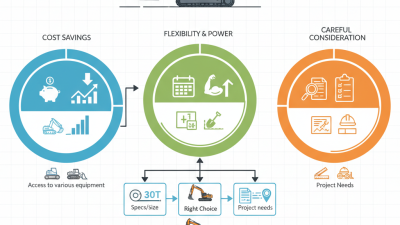
Expert Dave Morris, a leading figure in the heavy equipment rental industry, emphasizes, "Flexibility and innovation are crucial for meeting changing market needs." This trend reflects a shift where companies prefer renting equipment rather than purchasing it outright. The advantages include cost savings and access to the latest machinery.
However, challenges remain. Despite the positivity, many companies struggle with maintenance and logistics. Additionally, the integration of new technologies requires ongoing training. These factors must be addressed as the industry prepares for the future of heavy equipment rental.
Emerging Technologies in Heavy Equipment Rental for 2026
Emerging technologies are transforming the heavy equipment rental industry in 2026. Digital platforms streamline operations. Rental companies can manage inventories more efficiently than before. Data analytics tools offer insights into usage patterns. This helps businesses make informed decisions about their equipment needs.
Another significant trend is the rise of telematics. These technologies enable real-time monitoring of equipment. Companies can track performance metrics and maintenance needs. This not only enhances productivity but also minimizes downtime. With GPS tracking, rental firms can recover stolen equipment swiftly.
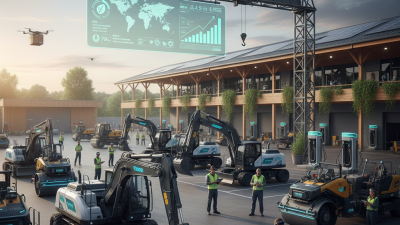
The integration of electric and hybrid machinery is also noteworthy. These machines lower carbon footprints and appeal to eco-conscious customers. While the upfront costs may be high, the long-term savings can be substantial. However, industries must consider the challenges of charging infrastructure. These shifts demonstrate both opportunities and hurdles for global buyers in the heavy equipment rental market.
Sustainable Practices Influencing Heavy Equipment Rentals
Sustainable practices are reshaping the heavy equipment rental market. Buyers are increasingly prioritizing eco-friendly options. Rented equipment that meets green standards appeals to many companies. They seek machines that lower emissions and enhance operational efficiency. This trend is not just about compliance; it reflects a commitment to environmental responsibility.
Tips: Look for equipment that has energy-efficient features. Assess if products are certified for sustainability. Choosing local rental services can minimize transportation emissions too.
Customers are also interested in lifecycle assessments. Evaluating a machine's total environmental impact can reveal hidden costs. Some rentals may seem cheaper initially but may not consider long-term environmental implications. Reflect on how often you use a piece of equipment. Over-reliance on rentals without understanding each unit's impact can lead to increased waste.
Tips: Analyze your project's needs thoroughly before renting. This can help cut down on unnecessary waste. Remember, efficiency isn’t just about immediate costs; it’s about long-term value.
Shifts in Consumer Preferences for Heavy Equipment Rental Services
In recent years, consumer preferences in heavy equipment rental services have shifted significantly. Buyers now seek more flexible rental terms that align with their project timelines. Many prefer short-term rentals over long-term commitments. This change reflects a desire for adaptability in a fast-paced industry.
Sustainability is also becoming a key factor. Customers are increasingly interested in eco-friendly equipment options. They want to minimize their carbon footprint. As a result, rental companies may need to consider their fleets’ environmental impact. However, the integration of sustainable machinery can be costly and may require further investments.
Moreover, technology plays a pivotal role in shaping rental decisions. Many clients now expect online platforms for easy booking and tracking. This demand for digital solutions can strain traditional rental services not equipped to meet these expectations. There is a noticeable gap between what buyers want and what some providers offer. Addressing these misalignments may be essential for staying competitive.
Global Market Analysis: Heavy Equipment Rental Industry Trends
The heavy equipment rental market is evolving rapidly. According to a recent market report, the global heavy equipment rental sector is projected to reach $150 billion by 2026. This growth is driven by several factors, including increased construction activities and infrastructure development in emerging markets. The demand for flexible rental solutions is also on the rise, allowing companies to adjust equipment availability based on project needs.
Rental companies are focusing on sustainability. A significant portion of buyers is prioritizing eco-friendly machinery. Reports indicate that 35% of companies are looking to rent equipment with lower emissions. This trend reflects a broader commitment to environmental responsibility in construction and heavy industries. However, the challenge remains for many rental firms to keep up with these evolving demands while maintaining competitive pricing and service quality.
Technological advancements are reshaping the industry landscape. The integration of telematics has improved equipment monitoring and management. Rental companies can optimize their fleets for better utilization. However, the initial investment in these technologies can be a hurdle. Companies must balance long-term benefits with short-term costs to remain competitive in the market. As the industry adapts, continuous reflection on operational practices will be essential for sustained growth.
2026 Top Heavy Equipment Rental Trends
Impact of Economic Factors on Heavy Equipment Rental Demand
The heavy equipment rental market is experiencing notable shifts driven by various economic factors. According to a 2023 report by Allied Market Research, the global heavy equipment rental market is projected to reach $200 billion by 2026, growing at a CAGR of 5.4%. This growth is significantly influenced by economic fluctuations and infrastructure investments.
Economic recovery following the pandemic has sparked increased demand for construction projects. Governments are investing heavily in infrastructure. For instance, the American Society of Civil Engineers recently estimated that the U.S. needs $4.5 trillion to support its infrastructure by 2025. Such investments drive the need for rental heavy equipment, making it a preferred choice over purchasing, particularly for cash-strapped firms.
However, challenges persist. Rising interest rates can dampen investment in construction, leading to reduced rental demand. Notably, the 2023 Equipment Leasing and Finance Foundation report indicates that 40% of equipment companies have faced slower-than-expected growth due to economic uncertainty. This unpredictability poses a risk, prompting companies to reassess their rental equipment strategies and demand forecasts. The heavy equipment rental landscape is not just about growth; it involves a complex interplay of economic conditions that merits careful analysis and planning.
2026 Top Heavy Equipment Rental Trends for Global Buyers - Impact of Economic Factors on Heavy Equipment Rental Demand
| Region |
Projected Growth Rate (%) |
Economic Factors Influencing Demand |
Popular Equipment Types |
End User Industries |
| North America |
5.5% |
Infrastructure spending, labor shortages |
Excavators, Cranes |
Construction, Mining |
| Europe |
4.8% |
Regulatory changes, sustainability initiatives |
Generators, Forklifts |
Logistics, Agriculture |
| Asia-Pacific |
7.2% |
Urbanization, increased investments |
Bulldozers, Backhoes |
Real Estate, Infrastructure |
| Latin America |
3.5% |
Economic recovery, resource extraction |
Dump Trucks, Pavers |
Mining, Construction |
| Middle East & Africa |
6.0% |
Oil prices, tourism developments |
Telehandlers, Road Rollers |
Oil & Gas, Tourism |