Why Choose Mini Excavators for Global Projects?
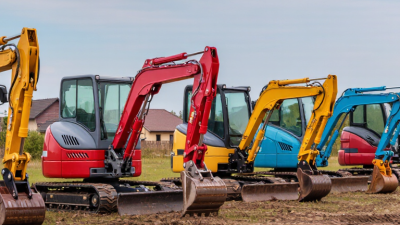
Global construction sites rarely offer identical working conditions. A compact urban lot may sit beside a hospital, while a rural project may depend on narrow access roads. Mini excavators help contractors respond to these differences. Their compact frames fit through gates, alleys, and restricted entrances. Their low ground pressure can also reduce surface damage on finished landscaping. With interchangeable buckets, augers, breakers, and grading blades, one machine can support several tasks.
Mike Fitzgerald, a compact equipment specialist at Caterpillar, has said, “The versatility of a mini excavator is one of its greatest strengths.” This view reflects daily field experience. Operators can trench for water lines, remove stumps, shape drainage channels, and prepare foundations with one adaptable platform. Transport is simpler, too. Many models can travel on a standard trailer, reducing mobilization time between work areas.
Still, the choice is not perfect. A mini excavator may lack the lifting capacity required for deep excavation or heavy rock removal. Poor attachment matching can also reduce productivity. Soil conditions, service availability, operator training, and local transport rules deserve careful review. These details matter more than attractive catalog specifications.
In global projects, reliability often comes from practical fit. A machine that starts easily, reaches tight corners, and receives prompt maintenance can protect the schedule. Mini excavators are not universal solutions. They are flexible tools for projects where access, precision, and transport efficiency shape every decision.
What Defines a Mini Excavator and Its Core Functions
Why Choose Mini Excavators for Global Projects?
What Defines a Mini Excavator and Its Core Functions
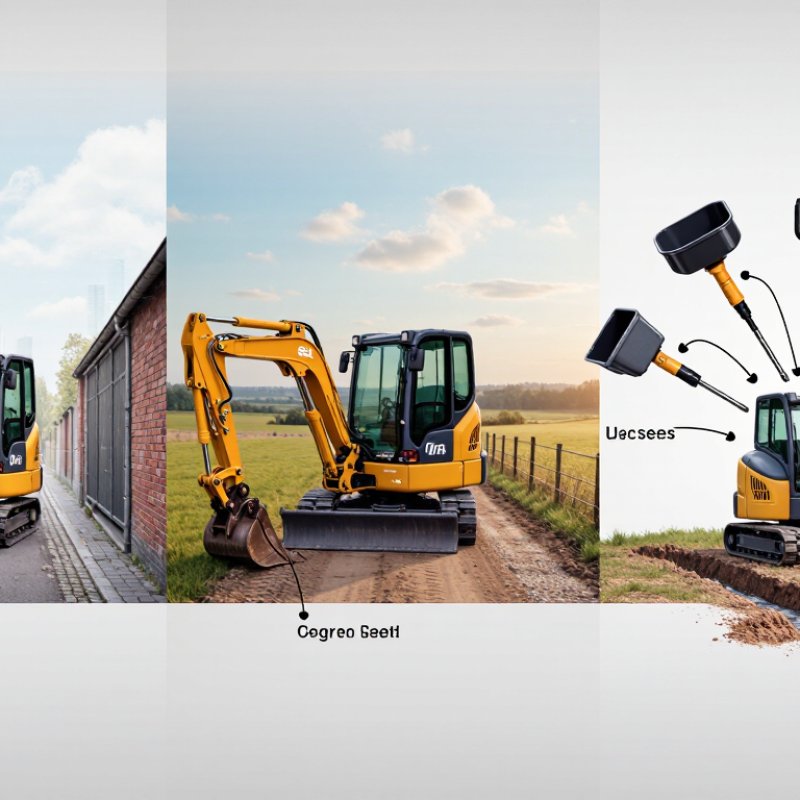
A mini excavator is generally a tracked machine weighing below six metric tonnes. This industry definition is practical, not universal. The machine combines a boom, dipper arm, bucket, hydraulic system, and rotating upper carriage. Some models use zero-tail-swing designs for narrow work areas. That matters beside walls, roadside drains, and crowded urban foundations.
Its core functions include digging, trenching, grading, lifting, and material placement. Attachments can add breaking, augering, compacting, or brush-cutting abilities. A 1.8-ton machine may enter through a standard gate and work around existing utilities. Operators still need careful ground checks. Compact size does not remove overturning risks.
Market demand supports this flexible role. The Business Research Company’s 2024 Mini Excavators Global Market Report valued the sector at about 7.47 billion dollars in 2024. It projected growth toward approximately 9.44 billion dollars by 2028. The American Rental Association’s 2024 forecast placed United States construction and industrial equipment rental revenue near 78.7 billion dollars. Rental access can help contractors match machine size with short projects.
Fuel use, transport cost, and operator visibility often influence global purchasing decisions. Yet the smallest machine is not always the best choice. Hard rock, deep excavation, or heavy lifting may require greater reach and stability. That assumption can fail. Local soil conditions and attachment availability deserve equal attention.
How Mini Excavators Support Work in Diverse Global Environments
Mini excavators support global projects because their small footprint adapts to crowded and changing worksites. In dense neighborhoods, operators can work beside walls, parked vehicles, and narrow service lanes. Their compact frames simplify transport between sites, even where roads are rough or access is limited. On small farms, they can clear drainage channels without disturbing nearby crops. In mountain villages, stable positioning matters more than speed. A careful operator reads the slope, soil, and weather before digging. Conditions vary sharply.
In hot, dusty regions, daily checks protect cooling systems, filters, and hydraulic connections. In humid coastal areas, cleaning and corrosion control deserve equal attention. Frozen ground demands different attachments and slower, measured passes. Soft wetlands require low-impact planning, temporary access routes, and careful attention to machine weight. These choices reduce delays and help crews protect existing utilities. Still, compact does not mean harmless. A small machine can damage buried pipes or unstable edges when planning is rushed.
Tips: Ask local operators about soil behavior, seasonal rain, and repair access. Confirm lifting limits before choosing attachments. Keep inspection records. Use trained operators who understand local safety procedures. Leave room for mistakes in the schedule; weather often wins. Project managers should compare transport dimensions, digging depth, ground pressure, energy needs, and attachment compatibility. A machine may perform well in a test yard but struggle on wet clay or steep gravel.
Why Choose Mini Excavators for Global Projects?
How Mini Excavators Support Work in Diverse Global Environments
| Global Work Environment | Relevant Mini Excavator Characteristic | Typical Industry Range or Fact | How It Supports Project Delivery |
|---|---|---|---|
| Dense Urban Areas | Compact dimensions and reduced tail swing | Approximately 0.7–2.2 m overall width across common mini-excavator classes | Allows work in narrow streets, backyards, alleys, and spaces between buildings while helping reduce disruption to pedestrians and nearby structures. |
| Residential and Commercial Sites | Lower ground pressure than many larger excavators | Rubber tracks distribute machine weight over a wider contact area than narrow wheels | Helps limit surface damage on lawns, paved areas, landscaped sites, and finished construction zones when the machine is correctly selected and operated. |
| Roads, Bridges, and Remote Locations | Transportable operating weight | Common mini-excavator operating weights range from about 0.8–8 tonnes | Many models can be moved by light or medium-duty transport equipment, reducing mobilization requirements compared with larger excavators. |
| Utility Installation and Maintenance | Suitable digging depth for shallow infrastructure | Typical maximum digging depths are approximately 1.5–5.5 m, depending on machine size and configuration | Supports trenching for water lines, drainage, electrical conduits, telecommunications, and other underground services. |
| Mountainous and Uneven Terrain | Tracked undercarriage and independent boom positioning | Tracks provide continuous ground contact; some models offer a dozer blade and adjustable working geometry | Improves stability and maneuverability on sloped or irregular ground, subject to site-specific slope limits and operator procedures. |
| Agricultural and Rural Projects | Attachment flexibility | Common attachments include buckets, breakers, augers, grapples, grading blades, and compactors | One base machine can perform drainage, post-hole drilling, land preparation, demolition, material handling, and maintenance tasks. |
| Hot, Dusty, or Sandy Regions | Enclosed hydraulic systems and serviceable filtration | Engine and hydraulic performance depends on correct filtration, cooling, lubrication, and maintenance intervals | Supports reliable operation when air filters, radiators, hydraulic components, and fluids are inspected and maintained for local conditions. |
| Cold and Snow-Prone Regions | Cold-weather preparation requirements | Starting and hydraulic performance are affected by temperature, battery condition, fuel properties, and fluid viscosity | With suitable fluids, battery care, warm-up procedures, and approved cold-weather equipment, the machine can support seasonal excavation and maintenance work. |
| Noise-Sensitive Locations | Smaller engine size and compact operating profile | Acoustic output varies by model, attachment, load, and operating condition; local noise limits still apply | Can be more appropriate than larger equipment for work near homes, schools, hospitals, and public areas when noise-control procedures are followed. |
| Projects with Limited Access | Zero- or minimal-tail-swing configurations | Some designs keep the rear of the machine within or close to the track width while rotating | Helps operators work near walls, fences, parked vehicles, and other obstacles with improved clearance management. |
| Low-Emission or Indoor Applications | Electric and low-emission power options in selected classes | Battery-electric mini excavators produce no direct exhaust emissions during operation | May support indoor, enclosed, urban, or emissions-controlled work, provided charging capacity, operating time, and local regulations are addressed. |
| Developing Infrastructure Markets | Simple deployment and broad task coverage | One compact excavator can combine digging, grading, lifting, breaking, and drilling with compatible attachments | Improves equipment utilization and reduces the need to bring several specialized machines to smaller or widely distributed job sites. |
Note: The specifications shown are representative industry ranges rather than limits for every mini excavator. Actual dimensions, operating weight, digging depth, noise level, emissions performance, and attachment compatibility vary by machine configuration, local regulations, and operating conditions.
Key Advantages for Transport, Access, and Project Efficiency
Why Choose Mini Excavators for Global Projects?
Key Advantages for Transport, Access, and Project Efficiency
On global construction projects, transport costs and restricted access can shape the entire work plan. Mini excavators are often easier to move between sites because many models fit on compact trailers. Their lower operating weight can reduce loading demands and transport delays, subject to local regulations. A trained crew can secure the machine, inspect tie-downs, and reach the next site with less downtime. Small footprint, real advantage.
In dense cities, narrow gates and finished pavements leave little room for large equipment. A compact excavator can work beside walls, through service alleys, or inside landscaped compounds. Zero-tail-swing designs help operators rotate near obstacles, but clearance checks remain essential. Rubber tracks may reduce surface damage, while ground mats protect weak soil and decorative paving. Access changes everything.
Project efficiency comes from matching machine size, attachment, and operator skill to the task. A hydraulic breaker may handle light concrete removal, while an auger supports precise post or foundation work. Quick attachment changes can reduce idle time when crews switch between digging, grading, and backfilling. Still, compact equipment is not automatically efficient. Poor planning, overloaded trailers, or unsuitable soil can erase its advantages. Site surveys, daily inspections, and clear operating plans improve reliability. Plans can be wrong. Experienced teams measure access twice before selecting the smallest machine that safely meets production needs.
Selecting the Right Mini Excavator for Different Regional Needs
Why Choose Mini Excavators for Global Projects?
Selecting the right mini excavator begins with local conditions, not catalogue size. Recent estimates from Grand View Research and Fortune Business Insights place the global mini excavator market near US$8–10 billion in 2023. Both reports expect continued growth through 2030, at roughly 4–6% annually. That growth reflects demand for compact machines in urban construction, agriculture, utilities, and landscaping.
Regional work changes the specification. Dense European sites may require low-noise operation, narrow tail swing, and compliance with Stage V emissions rules. North American contractors often prioritize hydraulic flow, transport capacity, and compatibility with Tier 4 Final requirements. In tropical regions, sealed electrical systems, corrosion protection, and efficient cooling deserve closer attention. High-altitude projects need engine performance checks. Small details matter. Dry, dusty sites can quickly expose weak filtration and poor service access.
Tips: Measure gate widths, trailer limits, and working height before purchase. Match auxiliary hydraulic flow to the actual attachments. Review local emissions rules with an independent technician. The cheapest machine may become expensive when parts arrive slowly. That assumption is easy to miss. I have also seen operators choose excessive power for tight sites, reducing productivity through frequent repositioning. Regional dealer coverage, operator training, and spare-part availability should be assessed beside price. Global infrastructure varies sharply, so one universal configuration rarely performs equally well everywhere.
Operational, Safety, and Maintenance Considerations Worldwide
Mini excavators suit global projects because they combine compact access with practical digging power. Their smaller footprint helps crews work beside buildings, roads, and narrow utility corridors. However, operating conditions can change sharply between regions.
In hot climates, inspect coolant levels, hoses, and hydraulic oil before each shift. Fine dust can enter filters and accelerate wear. Coastal projects need extra attention to exposed metal and electrical connections because salt air promotes corrosion. Cold regions create different risks. Thickened fluids, frozen ground, and reduced battery performance can delay safe start-up. Allow warm-up time. Do not force controls.
Safety depends on local ground conditions and disciplined communication. Operators should check underground service drawings before digging, then confirm the area physically. A clear exclusion zone protects workers from swinging equipment and falling loads. In multilingual teams, simple signs and pictograms often work better than long instructions. Seat belts, stable positioning, and controlled travel remain essential on slopes. Small machines can still overturn.
Maintenance planning should include daily inspections, scheduled lubrication, track tension checks, and documented fault reporting. Keep critical filters, seals, and hoses available when supply routes are uncertain. Service intervals may need adjustment under severe dust, heat, or continuous loading. This is where plans sometimes fail: teams copy a standard schedule without considering the site. Experienced supervisors review machine behavior, not just paperwork. Unusual vibration, rising temperature, or slow hydraulic movement deserves attention before a minor defect becomes expensive downtime.
Related Posts
-
10 Best Mini Excavators for Every Budget?
-
Why is the Excavator Machine Essential for Construction Projects?
-
How to Choose the Best Mini Excavator for Your Needs?
-
Top 10 Heavy Equipment Shipping Tips for Global Buyers?
-
Top Excavation Equipment for Construction Projects Worldwide?
-
Why Choose Equipment Rental for Your Next Project?