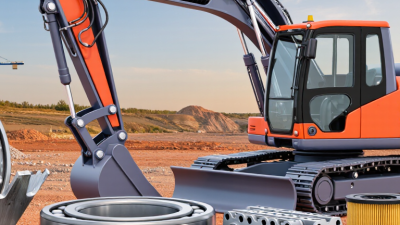
2026 Best Equipment Parts Suppliers for Global Buyers?
Finding the best equipment parts suppliers in 2026 requires more than comparing catalogs or advertised prices. Global buyers need accurate fit, traceable quality, and dependable support after payment. A supplier may list thousands of components, yet fail when a hydraulic seal arrives without batch information. This guide evaluates suppliers through practical purchasing evidence, including verified part numbers, manufacturing capabilities, warranty terms, and delivery performance.
Jim Umpleby, Caterpillar’s chairman and chief executive officer, has said, “Our strategy is to focus on the things we can control.” This principle matters when selecting an international equipment parts partner. Buyers can control their verification process. They can request material certificates, inspect packaging, confirm production dates, and test compatibility before large orders. Fit matters. Documentation matters. Promises are not proof.
The comparison considers OEM, aftermarket, and specialized suppliers serving construction, mining, agriculture, and industrial machinery. It looks beyond low prices. A cheaper filter is not economical if it clogs early or delays a remote repair. A useful supplier should provide clear technical drawings, responsive engineers, stable lead times, and realistic stock information. One spare gearbox on a wooden pallet can reveal more than a polished website.
No ranking can remove uncertainty. Supplier data can change. Regional service may also vary. That weakness deserves attention. Buyers should still verify current certifications, references, and replacement policies before ordering. The strongest suppliers combine product knowledge with honest communication. They help customers reduce downtime, manage inventory, and make defensible purchasing decisions across international markets.

What Equipment Parts Suppliers Provide and Why They Matter
Equipment parts suppliers do more than ship boxes. They help global buyers identify compatible components for demanding machinery. Their work may include bearings, seals, filters, valves, sensors, and hydraulic hoses. Good suppliers check model numbers, dimensions, materials, pressure ratings, and operating temperatures before quoting. A small mismatch can cause leakage, vibration, or unexpected downtime.
Reliable suppliers provide technical drawings, inspection records, batch information, and clear installation guidance. They also explain lead times, packaging methods, warranty limits, and storage requirements. These details matter when parts cross borders and reach different climates. Experienced engineers can suggest suitable alternatives without hiding important performance differences. Traceable documents also support safer maintenance and more consistent purchasing decisions. The cheapest part is not always the lowest-cost choice.
A perfect catalog does not exist. Some suppliers list outdated specifications or answer technical questions too quickly. Buyers should request samples, verify measurements, and review test evidence before large orders. A useful supplier listens to maintenance teams, not only purchasing departments. They understand that a filter removed in a dusty workshop needs different attention from one used in a clean facility. Responsive service matters during breakdowns, but careful advice matters before them. Reliability is built through accurate information, repeatable quality checks, and honest communication.
How to Evaluate Equipment Parts Suppliers for Global Purchasing
Evaluating equipment parts suppliers starts with evidence, not attractive catalog photos. Ask for traceable material certificates, inspection records, and documented quality procedures. The ISO Survey 2022 recorded more than 1.2 million ISO 9001 certificates worldwide. Certification helps, but it does not prove every shipment is reliable. Request a sample inspection report for a valve, bearing, or hydraulic seal before placing a large order. Check whether serial numbers match the packing list.
Delivery capability deserves equal attention. Maritime transport carries over 80% of global merchandise trade, according to the United Nations Conference on Trade and Development’s Review of Maritime Transport 2023. A supplier should explain its export process, port options, packaging method, and contingency plan. Ask for recent on-time delivery data, not only promised lead times. A useful test is a small trial order sent to your actual warehouse. It reveals labeling errors, moisture protection, and communication delays.
Cost comparisons must include the operating risk. Compare total landed cost, including tooling, inspection, freight, duties, spare units, and potential downtime. A cheaper coupling is not cheaper if its dimensions fail during installation. Review payment terms, warranty wording, change-control procedures, and response times. Suppliers should identify production locations and critical subcontractors. I still give too much weight to a polished quotation sometimes. A scorecard can reduce that bias, but it is never perfect. Keep written records of every technical clarification.
Key Certifications, Quality Standards, and Product Compatibility
In 2026, the best equipment parts suppliers will prove more than low prices. They will document quality, compatibility, and production control. The ISO Survey 2022 recorded 1,265,216 ISO 9001 certificates worldwide. This figure shows adoption, not automatic product excellence. A certificate is only the starting point.
Global buyers should verify the certificate number, issuing body, scope, and expiration date. ISO 9001 supports consistent processes, while ISO 14001 addresses environmental management. Sector-specific approvals may also matter, including pressure, electrical, or automotive requirements. Local conformity rules must match the destination market. Supplier audits should examine incoming inspection, calibration records, nonconformance handling, and batch traceability. Ask for real test reports, not attractive brochures.
Compatibility deserves closer attention. Request controlled drawings, material grades, dimensional tolerances, load ratings, voltage limits, connector details, and software requirements. A replacement part may fit physically but fail under heat, vibration, or continuous duty. The supplier should provide a certificate of conformity and sample inspection data. Independent testing is useful for critical assemblies. I have seen supplier specifications omit one small interface detail, causing expensive installation delays. That risk is avoidable, but only when engineers compare the original part and replacement line by line. Procurement teams should also review warranty terms, change-notification procedures, and spare-part availability. Supplier websites can look professional. Evidence matters more.
2026 Best Equipment Parts Suppliers for Global Buyers
Key certifications, quality standards, and product compatibility references based on the latest widely used international editions.
Edition year is shown for commonly referenced quality, safety, environmental, energy-management, and machinery-safety standards. Buyers should verify the supplier’s current certificate scope, validity, testing documentation, dimensions, materials, ratings, and interface compatibility before purchase.
International Pricing, Logistics, Warranty, and After-Sales Support
2026 Best Equipment Parts Suppliers for Global Buyers?
International pricing now requires more than a low catalogue price. The World Bank’s 2023 Logistics Performance Index covered 139 economies and highlighted customs, infrastructure, shipment tracking, and delivery timeliness. Buyers should request landed-cost quotations, not only unit prices. Include packaging, export documents, insurance, duties, and destination handling. A part priced at 80 dollars may become 125 dollars after freight and clearance.
Logistics reliability deserves evidence. UNCTAD’s Review of Maritime Transport 2024 reported that maritime trade grew 2.4% in 2023, while disruptions created longer routes and higher operating pressure. Ask suppliers for stock locations, dispatch times, transport options, and tracking procedures. For critical parts, keep a small local buffer. It costs more upfront. Downtime can cost more. Warranty terms should state coverage, claim deadlines, inspection requirements, and return freight responsibility. Service quality often depends on response time, technical drawings, and accurate compatibility checks. I would still verify every specification; supplier databases can contain outdated dimensions.
Tips: Compare three landed-cost offers. Request serial-number compatibility checks. Confirm whether replacement parts are new, tested, or refurbished. Ask for a written warranty process with named response times. The process matters.
A reliable supplier should provide inspection photos, batch records, installation guidance, and multilingual support when needed. The International Trade Centre’s trade data tools also help buyers compare import values and supplier markets before negotiation. However, public data is not perfect. Use it as a screening tool, then validate delivery history through references and recent shipping records.
| Parts Category | Typical Product Scope | Indicative Export Price Range (USD / Unit) |
Common Minimum Order | Typical Production Lead Time | Typical International Transit Time | Common Incoterms | Typical Warranty | Quality and Compliance Documents | After-Sales Support | Best Fit for Global Buyers |
|---|---|---|---|---|---|---|---|---|---|---|
| Hydraulic Components | Hydraulic pumps, valves, cylinders, motors, seals, and repair kits | USD 25–8,500 | 1–10 units for standard items; 1 unit for high-value assemblies | 7–35 calendar days | Air: 3–10 days Sea: 25–50 days |
EXW, FCA, FOB, CIF, DAP | 6–12 months | Dimensional inspection report, material certificate where applicable, pressure-test report, packing list, commercial invoice | Part identification support, installation guidance, troubleshooting by email or video, replacement review for verified defects | Repair networks, distributors, and buyers requiring compatibility with existing hydraulic systems |
| Engine and Powertrain Parts | Gaskets, filters, belts, pumps, injectors, starter parts, and overhaul components | USD 8–6,000 | 5–50 units for standard parts; 1–5 units for assemblies | 5–30 calendar days | Air: 3–12 days Sea: 25–55 days |
FCA, FOB, CIF, DAP | 6–12 months | Batch traceability, dimensional report, material or hardness report for selected components, certificate of conformity | Cross-reference verification, installation instructions, failure analysis, technical documentation in English | Fleet operators and maintenance buyers managing multiple equipment models |
| Undercarriage and Wear Parts | Track chains, rollers, idlers, sprockets, bushings, buckets, cutting edges, and teeth | USD 12–12,000 | 1–20 units depending on size and product type | 10–45 calendar days | Air: 5–14 days Sea: 30–60 days |
EXW, FOB, CFR, CIF | 3–12 months or wear-based terms | Hardness report, dimensional inspection, coating or heat-treatment record where applicable, load or fitment data | Wear-life guidance, fitment confirmation, installation drawings, claims assessment based on operating conditions | Construction, mining, agriculture, and rental fleets seeking lower total operating cost |
| Electrical and Electronic Parts | Sensors, relays, switches, controllers, wiring assemblies, alternator parts, and displays | USD 5–3,500 | 5–100 units for small components; 1–10 units for control assemblies | 7–40 calendar days | Air: 3–10 days Sea: 25–50 days |
EXW, FCA, DAP, DDP where legally and commercially suitable | 6–18 months | Functional test report, electrical test data, wiring diagram, serial or batch record, safety declaration where required | Remote diagnostics, wiring assistance, firmware or configuration guidance when applicable, replacement handling | Buyers that need traceability, technical compatibility, and fast troubleshooting |
| Filtration and Maintenance Parts | Air, oil, fuel, hydraulic, and cabin filters; service kits and maintenance consumables | USD 2–450 | 20–500 units depending on part size and packaging | 3–21 calendar days | Air: 3–10 days Sea: 20–45 days |
FCA, FOB, CIF, DAP | 3–12 months | Filter-media specification, efficiency data, dimensions, batch record, packing and labeling confirmation | Application matching, service-interval advice, packaging customization, replacement for manufacturing defects | High-volume maintenance programs and buyers prioritizing predictable replenishment |
| Seals, Bearings, and Fasteners | O-rings, seal kits, bearings, bushings, bolts, nuts, washers, and retaining hardware | USD 0.20–650 | 50–1,000 units for small standard parts; 5–50 units for large assemblies | 3–25 calendar days | Air: 3–10 days Sea: 20–45 days |
EXW, FCA, FOB, CIF | 3–12 months | Material certificate, dimensional report, hardness report, coating specification, batch identification | Material and size verification, replacement support, storage guidance, packaging and labeling assistance | Procurement teams consolidating many small parts into scheduled shipments |
| Cooling and Thermal Parts | Radiators, oil coolers, water pumps, thermostats, fans, hoses, and expansion tanks | USD 15–4,500 | 1–20 units for assemblies; 10–100 units for small components | 7–35 calendar days | Air: 4–12 days Sea: 25–55 days |
FCA, FOB, CFR, CIF, DAP | 6–12 months | Pressure-test report, dimensional inspection, material specification, leak-test record, packing photos | Fitment checking, installation instructions, leak or performance claim review, replacement coordination | Equipment owners operating in hot, dusty, or high-load environments |
| Attachments and Specialized Assemblies | Couplers, quick-hitch systems, work tools, compact attachments, and custom assemblies | USD 350–25,000 | 1 unit; project-based quotation is common | 20–75 calendar days | Sea: 30–65 days Air freight is usually cost-prohibitive |
FOB, CFR, CIF, DAP, project-specific FCA | 6–12 months | Engineering drawing, load rating, weld inspection, paint specification, user manual, certificate of conformity | Pre-sale technical review, installation drawings, spare-parts list, commissioning assistance, claim investigation | Buyers requiring application-specific engineering rather than off-the-shelf replacement parts |
| Recommended purchasing checkpoint: Confirm part number or drawing revision, operating conditions, material and hardness requirements, packaging dimensions, HS classification, country-of-origin documents, shipping insurance, warranty exclusions, and the process for defective-part inspection before placing an order. | ||||||||||
How to Select the Best Equipment Parts Supplier for Your Needs
2026 Best Equipment Parts Suppliers for Global Buyers?
Selecting an equipment parts supplier begins with technical fit, not a low quoted price. Share drawings, operating temperatures, load requirements, and material specifications before requesting a proposal. A capable supplier should ask precise questions about tolerances, surface treatment, installation space, and expected service life. Details matter.
Request sample parts and measurable inspection records. Check dimensions with calibrated tools, review material certificates, and confirm how nonconforming parts are handled. I once saw a replacement component pass a visual check but fail after repeated heat cycles. The supplier corrected the design, yet the delay exposed a weak testing process. Test before trust.
Reliable communication also matters across borders. Ask about production capacity, realistic lead times, packaging, shipping documents, and spare-part support. Verify traceability from raw material to final inspection. Certifications can support credibility, but they should not replace practical evidence. A video factory audit or independent inspection may reveal storage problems, crowded work areas, or unclear labeling. I would also compare several suppliers using the same technical checklist. Price still matters, but an inexpensive part can become costly after rework, downtime, and urgent freight. No supplier is perfect. Leave room for review, especially after the first delivery.
Related Posts
-
What Are the Best China Aftermarket Heavy Equipment Parts?
-
2026 Best Construction Equipment Parts Suppliers?
-
How to Find Reliable Construction Equipment Parts in 2026?
-
China Top Equipment Parts Suppliers for Global Buyers
-
Top 10 Best Heavy Equipment Parts You Need for Optimal Performance
-

Why Choose Heavy Construction Equipment for Your Project?