How to Choose the Right Undercarriage Parts for Your Machine?
Choosing the right undercarriage parts is not just a matter of matching a part number. It means understanding the machine, the ground it works on, and the hours it runs each week. Keith Haddock, an author and researcher of earthmoving equipment, has documented how machine design and operating conditions shape performance. A practical selection principle, consistent with that perspective, is: “Match the parts to the work, not just to the machine.” Treat that as guidance, not a direct quotation.
Start with the manufacturer’s specifications and confirm the machine’s make, model, serial number, and undercarriage configuration. Then consider the terrain. A crawler working on abrasive rock faces different wear from one moving through soft, wet soil. Track shoes, rollers, idlers, and sprockets must work together; replacing only the visibly worn component can leave the rest of the system mismatched. Small details matter.
Compare material quality, fit, warranty terms, and supplier support—not price alone. Ask how the parts are manufactured and whether they suit your machine’s operating conditions. Check wear patterns during routine inspections, too. Uneven wear may point to tension, alignment, or operating issues, rather than a poor-quality part. That distinction is easy to miss.
A careful choice can reduce premature wear and avoid unnecessary downtime. Still, no checklist replaces a competent inspection. Use service records, manufacturer guidance, and advice from a qualified parts specialist before ordering. One overlooked measurement can turn a confident purchase into a costly delay.
Identify Your Machine and Its Undercarriage Configuration
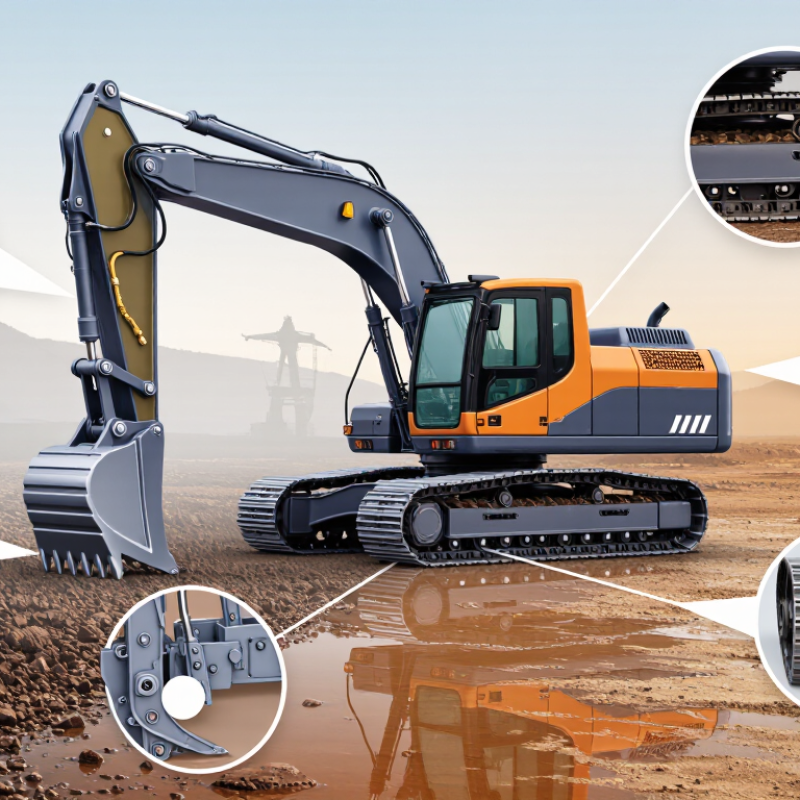
Identify the machine before selecting any undercarriage part. Record the manufacturer, model, serial number, operating weight, and working attachment. Then confirm the machine’s undercarriage configuration. Check track pitch, link count, shoe width, roller quantity, idler design, sprocket profile, and frame length. A standard excavator and a long-reach excavator may share a model family but use different components.
KHL’s 2024 Yellow Table reported approximately 1.2 million construction machines sold worldwide in 2023. This volume reflects a wide range of configurations, even within one machine class. Parts that look similar may differ by only a few millimeters. That difference can affect bolt alignment, chain tension, ground pressure, and service life. In field inspections, worn sprocket teeth can also make a correct track chain appear incorrect. Do not rely on photographs alone. Confirm dimensions against the service manual or a trusted parts catalogue. Record everything.
Tips: Measure twice. Count every link. Photograph the serial plate and both sides of the undercarriage. Compare the old part with the replacement drawing, not just its overall appearance. If the machine has rubber tracks, wide shoes, or a special counterweight, note these details before ordering. A rushed identification can create costly downtime. Even experienced technicians sometimes miss a changed frame specification. Recheck the data.
| Machine Category | Typical Operating Weight | Common Track Configuration | Typical Shoe Width | Typical Track Pitch | Typical Roller Arrangement | Key Identification Points | Common Replacement Parts |
|---|---|---|---|---|---|---|---|
| Mini Excavator | 1–6 tonnes | Rubber track or narrow steel track; compact fixed or retractable track frame | 180–400 mm | 90–135 mm | Typically 3–6 bottom rollers per side | Measure track width, pitch, number of links, sprocket tooth profile, and roller flange diameter | Rubber tracks, track chains, sprockets, idlers, bottom rollers, top rollers, track bolts |
| Compact Excavator | 6–12 tonnes | Steel track with single- or double-flange rollers; optional rubber pads | 400–600 mm | 135–171 mm | Typically 5–7 bottom rollers per side | Check chain pitch, link count, shoe bolt spacing, track gauge, and frame clearance | Track chains, shoes, sprockets, idlers, rollers, recoil spring assemblies, bolts and nuts |
| Standard Excavator | 12–25 tonnes | Heavy steel track; standard, wide, or low-ground-pressure configuration | 600–900 mm | 171–203 mm | Typically 6–9 bottom rollers per side | Confirm machine weight class, shoe type, chain pitch, link count, and final-drive sprocket compatibility | Track groups, track shoes, sprockets, idlers, bottom rollers, carrier rollers, guards and hardware |
| Heavy Excavator | 25–45 tonnes | Reinforced steel track; heavy-duty links and larger roller assemblies | 700–1,000 mm | 203–260 mm | Typically 8–10 bottom rollers per side | Measure link height, bushing diameter, shoe thickness, roller width, and sprocket tooth engagement | Heavy-duty track chains, shoes, sprockets, idlers, rollers, guards and track hardware |
| Compact Track Loader | 3–6 tonnes | Continuous rubber track with molded tread and steel embedded cords | 300–450 mm | 86–125 mm | Multiple rubber-track rollers with solid or suspended bogie systems | Verify overall track length, width, tread pattern, guide-lug position, and wheel contact dimensions | Rubber tracks, drive sprockets, idlers, track rollers, tension components and wheel hubs |
| Crawler Dozer | 8–25 tonnes | Steel track with sealed and lubricated track chain; standard or low-ground-pressure shoes | 450–915 mm | 171–228 mm | Typically 6–9 bottom rollers per side, depending on frame length | Identify shoe width, grouser height, link count, pitch, bushing diameter, and track-frame style | Track chains, shoes, sprockets, idlers, bottom rollers, carrier rollers, pins, bushings and bolts |
| Crawler Crane | 30–100+ tonnes | Heavy-duty steel track; wide track frames and high-capacity rollers | 750–1,200 mm | 203–260 mm | Typically 8–12 bottom rollers per side | Check track-frame length, shoe width, link count, pitch, roller load rating and transport configuration | Track chains, shoes, sprockets, idlers, rollers, recoil assemblies and track-frame components |
| Crawler Carrier | 2–15 tonnes | Rubber track or steel track; undercarriage may include a dump body or material platform | 250–700 mm | 100–180 mm | Typically 4–8 bottom rollers per side | Measure track length, width, pitch, guide-lug layout, roller spacing and drive-sprocket dimensions | Rubber or steel tracks, sprockets, idlers, rollers, tensioners and track-frame hardware |
Related Posts
-
2026 Best Aftermarket Heavy Equipment Parts for Optimal Performance?
-
2026 Top Heavy Equipment Rental Trends for Global Buyers
-
Top 10 Excavation Equipment You Need for Your Construction Projects
-
How to Choose the Best Construction Trucks for Your Needs?
-
Top 10 Volvo Construction Equipment Parts You Need for Optimal Performance
-

2026 Top Construction Equipment Trends You Should Know?