What Are the Top Construction Machinery Brands in China?
China has become a major force in construction machinery, with manufacturers supplying excavators, cranes, wheel loaders, bulldozers, and road equipment to projects worldwide. Names such as SANY, XCMG, Zoomlion, LiuGong, and Shantui often appear in discussions of the country’s leading brands. Their machines work on busy urban sites, highway projects, mines, and agricultural land. The right choice, however, depends on the job—not just the logo on the cab.
This guide looks at what makes these brands notable, including product range, engineering capabilities, global reach, and support for parts and maintenance. A buyer comparing excavators might examine digging force, fuel use, cab visibility, and access to local technicians. A crane buyer may care more about lifting capacity, transport requirements, and setup time. Details vary by model and market, so brand-level comparisons are only a starting point. There is no single winner for every site. That can be frustrating. Even a strong machine may disappoint when service is far away or replacement parts take weeks to arrive. The following overview offers a practical way to compare China’s top manufacturers and identify which strengths matter most for your project.
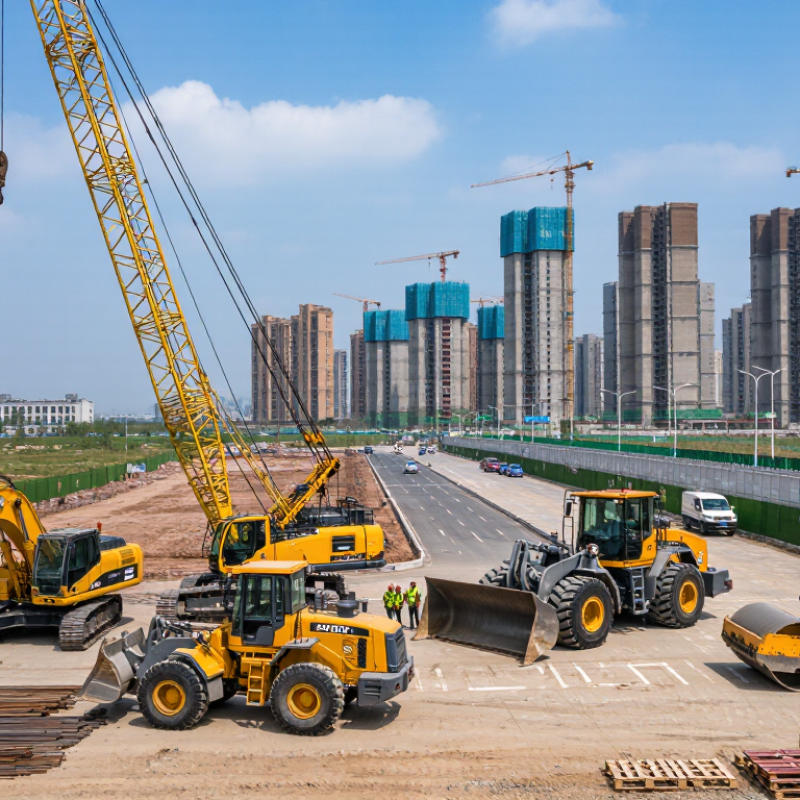
The Structure of China’s Construction Machinery Industry
China’s construction machinery industry is a connected production network, not a single line of assembly. Upstream suppliers provide steel, hydraulic systems, engines, sensors, and electronic controls. Component quality affects how a machine performs after long shifts in dust, heat, or rain. Manufacturers then integrate these parts into equipment for earthmoving, lifting, roadwork, and concrete handling.
The structure is varied. Large producers often manage research, manufacturing, sales, and service networks, while smaller firms focus on specific components or machine categories. Industrial clusters make it easier for suppliers and factories to coordinate, though distance and logistics still matter. A replacement hose or sensor may be a small part, but delays can keep a machine idle at a worksite. It happens.
Dealers, rental companies, repair workshops, and parts distributors connect factories with contractors and equipment operators. Their role continues after a machine leaves the production line. Maintenance records and access to replacement parts can influence operating costs as much as the purchase price. Demand shifts with infrastructure spending, mining activity, and construction cycles, so factories must manage changing orders and inventories. Electrification and digital monitoring are reshaping product development, but adoption differs across applications. The industry’s structure is not perfectly neat; smaller suppliers may depend on a few major customers, and that deserves closer attention.
Leading Construction Machinery Brands in China
Leading construction machinery brands in China compete through scale, product range, and dependable service. Buyers can compare excavators, loaders, cranes, and road equipment, but sales figures alone do not show which machine suits a jobsite. In its 2023 industry sales statistics, the China Construction Machinery Association recorded 195,018 excavators sold nationwide, including 105,017 exports. That export volume points to strong overseas reach, though it does not prove equal support in every market. A nearby parts depot matters. So does technician response time.
The same association reported 108,818 loader sales in 2023. These figures help explain why leading manufacturers invest in efficient engines, durable undercarriages, and simpler maintenance access. For a contractor, compare fuel use per operating hour, rated load, warranty terms, and parts availability—not brochure claims alone. Ask for service records from machines working in similar soil and weather. Real conditions vary. A brand’s reputation may also reflect one product category more than another, so check model-level performance before choosing. The data offers a useful map, but it cannot replace a site visit or a careful trial.
China’s Excavator Exports, 2020–2023
Annual export sales provide one way to track the international reach of China’s construction machinery industry.
Exports rose from 34,741 units in 2020 to 109,457 in 2022, then eased to 104,214 in 2023. Figures are annual excavator sales for export, reported by the China Construction Machinery Association (CCMA).
Key Equipment and Product Lines of Major Brands
China’s construction machinery sector covers a broad range of equipment, from compact excavators to heavy-duty lifting systems. Major manufacturers typically offer excavators, wheel loaders, bulldozers, motor graders, and truck-mounted or crawler cranes. Some also produce concrete pumps, batching equipment, and road rollers. Product lines often include several machine sizes, so buyers can match operating weight and bucket capacity to a site’s space and workload.
Equipment choice depends on more than headline power. For a road project, graders and rollers shape and compact each layer; an excavator may handle drainage trenches nearby. Check fuel use, service access, parts availability, and operator visibility. Details matter. A polished specification sheet can miss the daily reality of muddy tracks, tight turning areas, or long waits for replacement parts. I would compare maintenance records and local service coverage, not just purchase price. This comparison is easy to overlook.
Tips: Ask for operating hours, warranty terms, and a parts list before choosing. Check access. If possible, inspect the machine under load and listen for uneven engine sounds or hydraulic hesitation. A short field check can reveal issues a brochure cannot.
Factors to Consider When Comparing Chinese Manufacturers
When comparing Chinese construction machinery manufacturers, look beyond purchase price and rated power. Check payload, cycle time, fuel use, and service intervals against the job’s real conditions. A loader working dusty quarry shifts faces different demands from an excavator on a city site. Ask for test results under comparable loads, not just ideal demonstrations. Small details matter. Can a technician reach the filter without removing a panel? Are wear parts stocked nearby?
Parts availability and service response deserve measurable checks. The World Bank’s 2023 Logistics Performance Index assessed 139 economies across six dimensions, including logistics competence, tracking, and shipment timeliness. It does not rate machinery suppliers directly, but its measures offer a useful lens for evaluating delivery claims. Request average parts lead times, regional service coverage, and warranty exclusions in writing. Then verify them with customer references and records for the same machine class. A polished brochure is not evidence.
Also compare safety features, operator comfort, emissions documentation, and access to diagnostic tools. Ask whether software updates and troubleshooting support remain available after purchase. Calculate total cost over a realistic operating period, including fuel, scheduled maintenance, and likely downtime. One weakness in this comparison: estimates depend on local labor and duty cycles. I would revisit the figures after a site trial, especially if the machine will run multiple shifts.