What Are the 2026 Top Aftermarket Undercarriage Parts?
In 2026, aftermarket undercarriage parts are becoming more than simple replacement items. They influence machine uptime, fuel use, operator confidence, and total owning cost. Excavators and dozers now work on harder surfaces, longer shifts, and tighter production schedules. A worn track chain can quietly increase vibration, derailment risk, and daily operating expense.
Greg Worley, a Caterpillar undercarriage product specialist, has emphasized, “The undercarriage is the foundation of machine productivity.” That statement remains practical today. A strong foundation starts with correctly matched track chains, rollers, idlers, sprockets, track shoes, and seals. Quality matters. So does fit.
The leading aftermarket undercarriage parts for 2026 will likely combine hardened materials, improved sealing, and clearer wear indicators. Long-life track chains may attract fleet owners working in abrasive soil. Heavy-duty rollers can support machines facing rock, demolition debris, or constant travel. Better-designed shoes may improve flotation without adding unnecessary weight. Small improvements add up.
Still, “top” does not mean universal. A part that performs well in clay may disappoint in crushed stone. Brand reputation cannot replace measurement. This is where buyers sometimes misjudge the decision. They compare purchase prices first and operating conditions later. That order can be costly.
This guide examines the most promising aftermarket undercarriage parts for 2026. It considers durability, compatibility, service access, warranty confidence, and field experience. Some claims deserve skepticism. Real performance depends on maintenance, installation, and the ground beneath the machine.
2026 Aftermarket Undercarriage Ranking: Wear Rate, Cost, and Uptime Metrics
What Are the 2026 Top Aftermarket Undercarriage Parts?
The 2026 ranking should measure wear rate, installed cost, and uptime together. A low purchase price can hide frequent replacements. Track chains and sprockets usually deserve the highest attention because poor pitch matching accelerates both parts. Rollers, idlers, and track shoes follow closely. Their performance depends heavily on soil, tension, and operating habits.
This ranking uses a practical lifecycle model: 35% wear rate, 30% total cost, and 35% uptime. Wear should be recorded as percentage loss every 500 operating hours, not guessed from appearance. The ISO 15143-3 standard supports consistent machine data collection, although many fleets still record inspections manually. That weakens comparisons. A clean spreadsheet can still lie.
McKinsey’s Reinventing Construction report found construction productivity grew about 1% annually over two decades, far below many industrial sectors. That gap makes maintenance discipline commercially important. In field reviews, correctly matched chains and sprockets often deliver stronger uptime than the cheapest replacement set. However, published industry reports do not provide one universal aftermarket leaderboard. Conditions change the result. Abrasive soil can double wear pressure, while poor track tension may erase the benefit of premium metallurgy. Buyers should request hardness data, dimensional tolerances, warranty terms, and verified operating-hour records. Cost per working hour matters more than invoice price.
Track Chains and Links: Core Wear Parts Under ISO 16754 Inspection Standards
Track chains and links remain core wear parts in the 2026 aftermarket undercarriage market. KHL Group’s 2024 Yellow Table reported global construction equipment sales above 240 billion dollars. That scale supports steady replacement demand, especially for crawler excavators, dozers, and heavy-duty loaders.
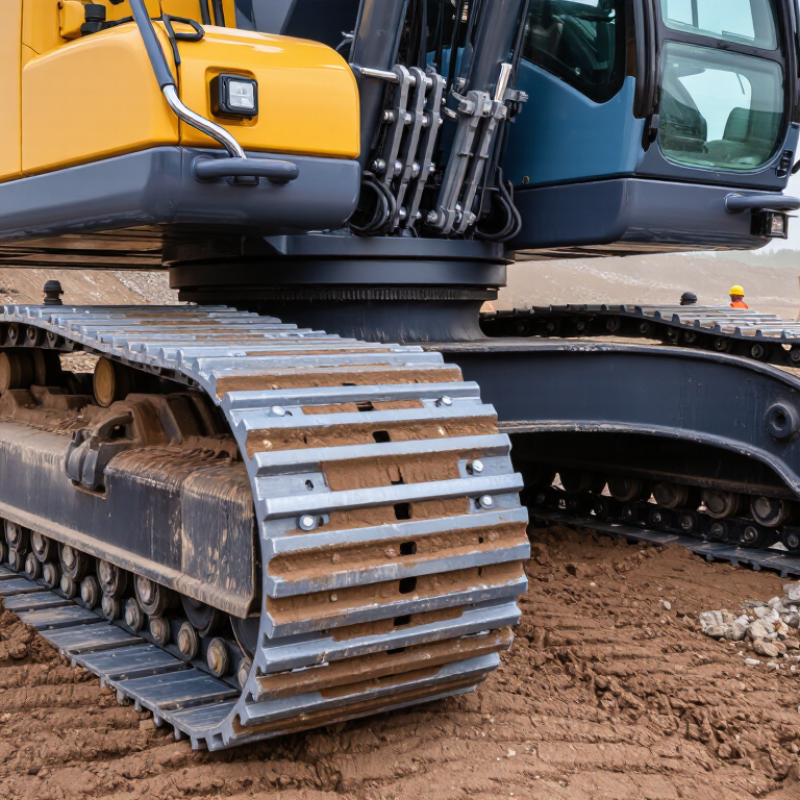
Track chains transmit engine power through pins, bushings, and links. Small dimensional losses can increase pitch, sprocket wear, and track adjustment problems.
Field inspections should measure link height, pitch elongation, bushing diameter, pin wear, and shoe bolt condition. A visual check is not enough. Dirt can hide cracking. Fresh paint can hide scoring.
ISO 16754 is often referenced incorrectly. It addresses average ground contact pressure for crawler machines, not a complete chain-wear inspection procedure. Technicians should use it as an operating-load reference, then apply documented dimensional checks and manufacturer-equivalent service limits. The ISO standard does not replace measurement.
A practical inspection records readings at several chain positions, including the most heavily loaded section. Uneven wear deserves attention. It may indicate poor tension, abrasive soil, misalignment, or incorrect shoe selection. The 2024 Off-Highway Research market analysis also highlights continuing equipment utilization and replacement activity across construction fleets.
However, market growth does not guarantee every aftermarket part will perform equally. Material hardness, heat treatment, seal quality, and machining accuracy still require verification. That assumption needs challenging. The cheapest link can become the most expensive decision.
Track Shoes: Grouser Profiles Selected by Ground-Pressure Data
Choosing aftermarket track shoes in 2026 requires more than matching bolt holes and shoe width. Grouser profiles should respond to ground pressure, soil moisture, machine weight, and working speed. A tall single grouser can deliver strong penetration on firm clay. However, it may slip or vibrate on loose sand. Wide shoes spread the machine’s load across a larger contact area. They can reduce sinking on soft ground, but excessive width may increase bending stress.
Field measurements provide a more reliable starting point than general recommendations. Technicians can record machine weight, track contact length, soil firmness, and operating depth. Pressure-sensitive mats or calibrated load cells can reveal uneven loading across the shoe. The results often expose problems that operators feel as vibration or steering resistance. Small differences matter.
Not every data set is complete. Soil conditions can change within one workday. That limitation deserves attention. A profile selected for wet loam may perform poorly after the surface dries. We have also seen operators choose deeper grousers for traction, then face faster wear on abrasive rock. A practical selection process combines pressure data with inspection records and short field trials. Check bolt seating, rail alignment, and grouser edge wear after several shifts. If the wear pattern looks uneven, the shoe profile may be wrong, even when initial traction feels impressive.
What Are the 2026 Top Aftermarket Undercarriage Parts? - Track Shoes: Grouser Profiles Selected by Ground-Pressure Data
Engineering reference table for selecting track-shoe grouser profiles according to typical machine ground-pressure conditions, traction demand, soil strength, and undercarriage wear priorities.
| Ground-Pressure Band | Typical Soil Condition | Recommended Grouser Profile | Typical Grouser Height | Typical Shoe Width Strategy | Traction Characteristics | Ground Disturbance | Wear and Service Considerations | Typical Machine Use |
|---|---|---|---|---|---|---|---|---|
| Below 35 kPa | Soft clay, saturated silt, peat, marshland, and low-bearing-capacity terrain. | Single bar with moderate height and a broad contact footprint. | Approximately 45–65 mm | Use wider shoes only when the carrier, final drives, and operating conditions permit the additional bending load. | Moderate forward traction with reduced sinkage and improved flotation. | Low when shoe width and track tension are correctly matched to the soil. | Very wide shoes can bend or crack under hard turns and side loading. Avoid excessive shoe width on firm ground. | Low-ground-pressure crawler dozers, swamp applications, wetland access, and soft-site reclamation. |
| 35–50 kPa | Wet loam, loose sand, recently placed fill, and mixed low-strength soils. | Moderate single grouser with a tapered or self-cleaning leading face. | Approximately 50–70 mm | Standard or moderately wide shoes selected to balance flotation and shoe strength. | Good general traction with controlled penetration and acceptable steering resistance. | Low to moderate, depending on moisture and track tension. | Suitable for general earthmoving where excessive grouser penetration would increase fuel use and soil damage. | Crawler excavators, medium dozers, material-handling crawlers, and site-preparation machines. |
| 50–70 kPa | Compacted soil, firm clay, gravelly soil, and variable construction-site ground. | Standard single bar with a balanced working edge and full-width support. | Approximately 55–75 mm | Standard shoe width is normally preferred for structural durability and predictable wear. | High all-round traction, stable steering, and balanced drawbar performance. | Moderate and generally manageable on prepared work surfaces. | Often the best compromise between traction, shoe life, roller loading, and replacement cost. | General-purpose crawler dozers, excavators, pipelayers, and crawler loaders. |
| 70–100 kPa | Dense clay, crushed aggregate, rocky fill, hardpan, and compacted haul roads. | High single grouser with a reinforced base and wear-resistant working edge. | Approximately 65–85 mm | Standard or narrow shoes are typically preferred to limit bending stress and ground penetration. | High penetration and strong drawbar pull, especially during pushing and climbing. | Moderate to high; turning can mark finished surfaces and increase soil shear. | High grousers improve traction but can accelerate grouser-tip wear, bushing wear, and link loading on hard surfaces. | Heavy dozers, quarry support machines, road construction, and hard-soil excavation. |
| Above 100 kPa | Very hard-packed ground, fractured rock, quarry floors, demolition debris, and abrasive surfaces. | Heavy-duty single bar with a wide wear base, reinforced corners, and maximum structural support. | Approximately 75–95 mm | Narrow or heavy-duty standard shoes are generally favored over extra-wide shoes. | Very high traction and penetration, with strong resistance to edge deformation. | High, particularly during counter-rotation or tight turns. | Prioritize steel strength, grouser-base support, bolt-hole accuracy, and resistance to impact and abrasive wear. | Mining support, quarrying, demolition, heavy ripping, and severe-duty crawler applications. |
| Variable: soft-to-firm routes | Sites where the machine repeatedly moves between wet soil, compacted sections, and abrasive access roads. | Moderate-height single grouser with a self-cleaning profile and reinforced shoe body. | Approximately 55–75 mm | Select the narrowest width that provides required flotation without overstressing the track chain. | Balanced traction across changing ground conditions with less compromise than extreme profiles. | Moderate and dependent on operating technique. | Versatility generally outweighs maximum traction. Inspect for uneven wear caused by repeated changes in soil strength. | Utility construction, utility-line work, infrastructure projects, and mixed-terrain rental fleets. |
| Any band with road travel | Mixed off-road work combined with frequent travel on paved or finished surfaces. | Low-to-moderate single grouser or road-friendly shoe with a broad, less aggressive contact edge. | Approximately 40–65 mm | Use a width that meets flotation needs while limiting excessive road contact and steering resistance. | Moderate traction with smoother travel and lower surface marking than tall grousers. | Low to moderate when operated with controlled turns. | Lower grouser height reduces road damage and vibration but may shorten service life in severe rock or high-slip conditions. | Municipal work, road building, utility maintenance, and machines frequently traveling between sites. |
Rollers, Idlers, and Sprockets: Matching Parts to 3,000-Hour Lifecycle Targets
What are the 2026 top aftermarket undercarriage parts? Rollers, idlers, and sprockets remain the practical answer for tracked excavators and dozers. The EquipmentWatch 2024 Cost Recovery Handbook places repair and maintenance allowances near 15–25% of hourly operating costs across many heavy-equipment classes. That makes lifecycle planning more valuable than choosing the lowest purchase price.
A 3,000-hour target needs matched parts, not isolated replacements.
Sealed track rollers should maintain oil retention and resist flange wear under abrasive soil. Front idlers need accurate alignment, strong recoil behavior, and smooth bushing contact. Sprocket teeth must match the track pitch precisely; even small pitch differences can accelerate bushing wear. Keep the set compatible.
The 3,000-hour figure is not magic. It may be unrealistic in rock, frozen ground, or poorly tensioned tracks. Field inspections should record shoe width, roller flange height, idler rim wear, and sprocket tooth profile. The 2024 Off-Highway Research market review highlights continuing demand for replacement components as global tracked-machine fleets age, but fleet age alone cannot predict service life.
My practical view is less tidy: a premium roller can fail early when daily cleaning is ignored. Parts quality matters. Operator habits matter more than many buyers admit.
Pins, Bushings, and Seals: Reducing Cat’s 50% Undercarriage Cost Exposure
In 2026, aftermarket undercarriage demand is shifting toward high-wear parts: pins, bushings, and seals. These components can reduce a machine’s commonly cited 50% undercarriage cost exposure when selected and installed correctly. On a 20-ton excavator, a worn pin may create visible side movement between the link and bushing. Small clearance becomes expensive quickly. It accelerates bore wear, track looseness, and uneven loading across the chain. We have seen operators replace pins without measuring bore ovality. That decision often repeats the failure. Measure first. Check pin diameter, bushing fit, and contact patterns before ordering parts. A reliable supplier should provide material specifications, hardness data, and dimensional tolerances. Low price alone proves very little.
Bushings deserve equal attention because their internal surface controls alignment and lubrication retention. In wet or abrasive ground, damaged seals allow fine grit to enter the joint. The grease then becomes a grinding paste. It is a quiet failure. Seals should match the joint design and operating temperature, not merely the outside diameter. Correct installation matters too; a distorted seal can leak before the machine returns to work. A practical maintenance plan records track hours, ground conditions, and measured wear at each inspection. Replace matched pin-and-bushing sets when clearances exceed service limits. Partial repairs may seem efficient, but they can transfer stress to older components. Aftermarket quality still varies. That is why field testing, traceable documentation, and honest inspection records matter more than confident promises.
2026 Top Aftermarket Undercarriage Parts
Estimated share of undercarriage replacement-cost exposure by component category
Pins and bushings represent the largest controllable wear-related cost area because they operate under continuous load and require accurate inspection, lubrication, and alignment. Seals are a lower-cost part individually, but early leakage can accelerate damage to pins, bushings, rollers, and idlers. The 50% benchmark reflects the commonly cited potential share of total machine owning and operating costs associated with undercarriage systems; actual exposure varies with soil, duty cycle, operator practices, and maintenance intervals.
Planning benchmark only; component percentages are normalized for comparison and should be validated against machine-specific service records.
Related Posts
-
What is Aftermarket Undercarriage Parts and Why Buy Them?
-

How to Choose the Best Aftermarket Undercarriage Parts for Your Equipment?
-
Top Aftermarket Undercarriage Parts for Heavy Equipment Buyers?
-
How to Choose the Best Excavator Rental for Your Project?
-
Top 10 Tips for Heavy Equipment Shipping You Need to Know?
-

What is Construction Equipment and How Does It Impact the Industry