
Managing remote construction parts supply presents challenges that don’t exist on accessible job sites. When your nearest parts supplier sits hours away and equipment failures mean project delays, smart planning becomes the difference between minor setbacks and major budget overruns. At Advantage Construction Equipment & Parts, we help project managers and logistics coordinators develop strategies that keep remote operations running smoothly even when parts challenges arise.
Remote sites demand different thinking about parts availability, inventory management, and supplier relationships. The strategies that work in urban settings often fail when distance and limited access complicate every supply decision.
Understanding Remote Site Challenges
Distance and Access Limitations
Remote construction sites face transportation barriers that affect parts delivery timing and costs. Poor road conditions, seasonal access restrictions, and long distances from distribution centers turn routine parts orders into complex logistics operations.
Weather conditions can shut down access for extended periods, making advance planning and strategic inventory management essential for maintaining equipment uptime. What takes overnight delivery in urban areas may require days or weeks for remote locations.
Limited Local Support Infrastructure
Remote sites typically lack the support infrastructure that urban projects take for granted. Local parts suppliers may not exist, and nearby dealers may not stock components for your specific equipment brands or models.
This isolation means you can’t rely on emergency parts runs or same-day supplier delivery when equipment fails. Every parts need requires advance planning and contingency preparation.
Strategic Inventory Planning
Critical Parts Identification
Effective construction site inventory starts with identifying which parts justify on-site storage based on failure probability, equipment criticality, and replacement difficulty. Not every part makes sense to stock, but certain components deserve space in your remote inventory.
Focus on parts that meet multiple criteria: high failure rates for your operating conditions, long lead times from suppliers, and critical impact on equipment operation. Hydraulic hoses, filters, seals, and electrical components often top this list for remote sites.
Site Assessment and Equipment Profile
Analyze your equipment fleet to understand parts commonality and unique requirements. Sites running multiple machines of the same model can stock fewer total parts while maintaining better coverage. Mixed fleets require more diverse inventory but may justify standardization over time.
Document each machine’s maintenance history and failure patterns. This data guides inventory decisions by highlighting which parts actually fail rather than theoretical possibilities that waste storage space and capital.
Inventory Level Calculations
Balance inventory investment against downtime risk and resupply timelines. Remote sites need deeper inventory than accessible locations, but unlimited stock isn’t practical or affordable.
Consider lead times from your suppliers, project duration, equipment usage intensity, and financial resources when setting inventory levels. Build enough buffer to handle typical failures while accepting that rare problems may require emergency logistics solutions.
Emergency Parts Kit Development
Kit Component Selection
Emergency parts kits contain high-priority items that keep critical equipment operational until comprehensive repairs can be arranged. These kits focus on temporary fixes and keeping machines running rather than perfect long-term repairs.
Include items like hydraulic fittings, hose repair kits, electrical connectors, gasket material, and common filters. Add specialty items specific to your equipment fleet and operating conditions.
Storage and Accessibility
Proper storage protects parts investment and ensures availability when needed. Remote sites face environmental challenges like temperature extremes, humidity, and dust that damage improperly stored components.
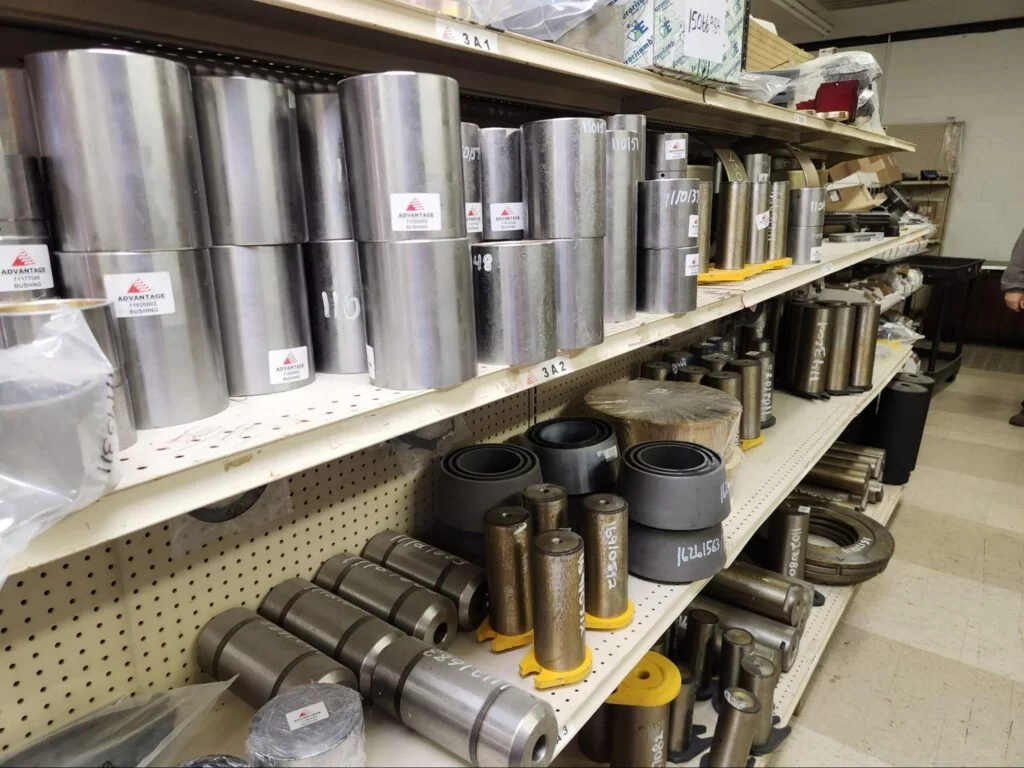
Organize emergency kits for quick access during breakdowns. Clear labeling and logical organization prevent wasted time searching for parts when equipment sits idle and project schedules slip.
Supplier Logistics Management
Building Reliable Supply Chains
Successful heavy equipment parts logistics for remote sites requires strong supplier relationships and clear communication about site access challenges. Work with suppliers like Advantage Construction Equipment & Parts who understand remote operation requirements and can adapt their processes accordingly.
Establish regular communication schedules and ordering procedures that account for long lead times and limited delivery windows. Some suppliers offer consolidated shipments that reduce freight costs and simplify receiving operations at remote locations.
Shipping and Transportation Planning
Coordinate parts shipments with site access schedules and weather windows. Missing a delivery window may mean waiting weeks for the next opportunity in severe remote locations.
Consider freight costs when ordering parts. Consolidated orders reduce per-part shipping expenses even when they require slightly earlier ordering to maintain inventory levels. Work with your parts solutions provider to optimize shipment timing and sizing.
Alternative Sourcing Strategies
Develop backup supply sources for critical situations when primary suppliers can’t meet urgent needs. This might include regional distributors, other contractors working nearby, or expedited freight options for true emergencies.
Understanding these alternatives before emergencies occur prevents scrambling under pressure when equipment downtime costs mount rapidly.
Contingency Planning
Equipment Redundancy Considerations
Some remote projects justify equipment redundancy for critical functions. Having backup machines means parts failures don’t halt operations while repairs are completed or parts are shipped.
Evaluate redundancy costs against downtime risks and project penalties. Major projects with tight schedules often justify additional equipment that smaller operations can’t afford.
Repair Capability Development
Building on-site repair capabilities reduces dependence on external service and parts availability. Train operators and maintenance staff on basic troubleshooting and temporary repairs that keep equipment running until proper fixes can be implemented.
Stock appropriate tools and repair equipment that enable your team to perform field repairs when parts arrive. Even simple capabilities like hydraulic hose fabrication significantly improve remote site resilience.
Communication Protocols
Establish clear procedures for parts ordering, emergency requests, and status updates. Everyone needs to understand who orders parts, how urgent requests get prioritized, and what information suppliers need for accurate fulfillment.
Poor communication wastes precious time when equipment sits idle and project progress stalls. Document procedures and train all relevant personnel before issues arise.
Inventory Management Systems
Tracking and Documentation
Maintain accurate records of on-site inventory including part numbers, quantities, storage locations, and usage history. This prevents ordering parts you already have while ensuring timely reordering of depleted items.
Simple spreadsheet systems work for smaller operations while larger projects may justify dedicated inventory management software. Choose systems that balance capability with the administrative resources available at remote sites.
Reorder Point Establishment
Set clear reorder triggers based on consumption rates and resupply lead times. Reordering at proper levels prevents stockouts while avoiding excessive inventory that ties up capital and storage space.
Review and adjust reorder points regularly based on actual usage patterns and changing project requirements.
Cost Management Strategies
Balancing Inventory Investment
Remote site inventory represents significant capital investment that must be balanced against downtime costs and project timelines. Too little inventory risks expensive delays while excessive stock wastes resources.
Calculate the cost of typical equipment downtime including lost productivity, schedule penalties, and idle labor. Compare these costs against inventory carrying costs to find the optimal balance for your situation.
Freight Cost Optimization
Shipping costs significantly impact remote site parts economics. Consolidate orders, use slower but cheaper freight options for non-urgent items, and coordinate deliveries to minimize transportation expenses.
Work with suppliers who understand these economics and help optimize ordering patterns for remote delivery.
Conclusion
Successful remote construction parts supply requires strategic planning, strong supplier relationships, and realistic contingency preparation. Project managers who invest in proper inventory planning, emergency preparedness, and logistics coordination keep equipment running and projects on schedule despite distance challenges.
At Advantage Construction Equipment & Parts, we work with remote operations to develop parts supply strategies that match their specific challenges and constraints. Our understanding of logistics requirements and extensive parts availability helps remote projects maintain equipment uptime.
Don’t let parts availability become your remote project’s weak point. Get a quote and discuss your remote site requirements with suppliers who understand the unique challenges you face.
Frequently Asked Questions
How much parts inventory should a remote construction site maintain?
Inventory levels depend on distance from suppliers, lead times, equipment fleet composition, and project duration. Focus on critical parts with high failure rates and long replacement times while accepting some risk for less critical items.
What parts should be included in emergency kits for remote sites?
Emergency kits should include hydraulic hoses and fittings, common filters, seals, electrical connectors, gasket material, and items specific to your equipment. Focus on parts that enable temporary repairs and keep critical equipment operational.
How can we reduce freight costs for remote site parts delivery?
Consolidate orders into fewer shipments, use slower freight options for non-urgent items, coordinate deliveries with site access schedules, and work with suppliers who can optimize shipment timing and sizing for remote delivery economics.
What supplier characteristics matter most for remote site support?
Look for suppliers with extensive inventory, understanding of remote logistics challenges, flexible ordering procedures, and willingness to consolidate shipments. Reliability and communication capability matter more than absolute lowest pricing for remote operations.
How do we prevent stockouts without excessive inventory investment?
Track consumption patterns, establish appropriate reorder points based on actual lead times, maintain accurate inventory records, and develop backup sourcing options for emergencies. Regular inventory reviews help balance availability against carrying costs.